Blog Post: Thank You, Southwest Florida: Reflecting on Seven Remarkable Years

As the Edison Awards celebrates its 40th anniversary this year, we’ve been doing a lot of looking back, and nowhere does that reflection feel more meaningful than in Southwest Florida.

For the past seven years, Fort Myers has been our home. Not just a venue for an annual Gala, but a genuine partner in bringing our mission to life: honoring the innovators shaping our world, and inspiring the next generation to join them. This year, we’re taking a gap year from hosting our gala event in the region. This is a deliberate pause, and we wanted to take this moment to say thank you.

Why Fort Myers, Of All Places

When we first started thinking about where to plant real roots for the Edison Awards, the answer was almost poetic. Thomas Edison came to Fort Myers in 1885, drawn by its climate and natural beauty, and built a winter estate and laboratory that became a home base for experimentation, and later a gathering place for fellow inventors, including his close friend Henry Ford. Decades before “innovation hub” was a phrase anyone used, Fort Myers already was one.

Seven years ago, we set out to reconnect that history to the present. Through the vision of former Mayor Randy Henderson, John Talmage and Tatum Walker, and the generosity and support from the Horizon Foundation, FGCU, Lee County and the City of Fort Myers, and so many other partners who believe in this community, we didn’t just tell that story, we built a stage for it. Southwest Florida became, once again, a place where the world’s innovators gathered. That’s a credit to the region as much as it is to us, and it’s something we’ll always be proud to have built together.

Bringing the World’s Innovators Home

Each year, we welcomed some of the most influential minds on the planet to Fort Myers. People whose ideas have reshaped entire industries and touched lives around the globe. Over seven years, that list included Jensen Huang, CEO of Nvidia; Jony Ive, former Chief Design Officer at Apple; Gwynne Shotwell, COO of SpaceX; Adam Silver, Commissioner of the NBA; Pat Gelsinger, CEO Intel; Carmichael Roberts, Breakthrough Energy Ventures; Bracken Darrell, CEO, VF Corp; and Reinhold Schmeiding, founder and CEO of Arthrex. The presence of thousands of innovators from more than 15 countries globally turned Southwest Florida into a meeting point for global innovation leadership, drawing international media attention and putting the region on the map alongside the world’s most recognized innovation hubs.

But the story was never just about who showed up for one night. It was about what stayed behind.

The Impact, By the Numbers

Beyond the headlines and the high-profile guests, our seven years in Southwest Florida delivered real, measurable impact. According to Lee County Visitor & Convention Bureau, six years of Edison Awards events generated $30 million in new economic impact for Fort Myers and Lee County, supporting local hospitality, tourism, and small businesses while drawing visitors, media, and business interest to the region. Just as meaningfully, the program helped build something harder to measure but just as valuable: a stronger sense of regional pride, connecting students, entrepreneurs, and civic leaders around a shared identity rooted in Edison’s legacy of collaboration and  invention.

Investing in What Comes Next

From the beginning, our work in Southwest Florida was as much about the region’s future as its present. Through hands-on programming with high school and college students across the community, we worked to connect young people directly to innovators, mentors, and career pathways, the kind of connections that can shape a lifetime of achievement. We’re incredibly proud of the students who walked away from these experiences with a new sense of what’s possible for them.

That commitment extended to a close partnership with the Collaboratory, Southwest Florida’s hub for civic innovation and social impact, helping strengthen the pipeline that connects bold local ideas to the resources needed to bring them to life. It’s a partnership we’re proud of and we are thrilled to continue supporting the Collaboratory’s Lightbulb Series events, keeping that connection to the local innovation community alive and active.

We also left something behind that we hope will outlast any single event: the Lewis Latimer Fellowship Program and the inception of the Innovation Walk, a permanent public tribute celebrating the region’s innovators.  

Why We’re Pausing, And Why We’re Not Worried About It

As the Edison Awards marks 40 years of honoring the people and ideas moving our world forward, it felt like the right moment to pause, reflect, and reimagine what the next chapter of this program looks like. That’s why we’re taking a gap year from our gala event in 2027 to make sure the next one is even better. 

“We’ll be spending this time researching how best to present the Edison Awards from 2028 through 2035, and identifying strategies to grow the program’s economic impact by 40 percent,” said Rob Manes, Director of Business Development. “We’ll be working closely with our Steering Committee throughout this process to secure investors and shape what comes next, and look forward to continuing to bring together the people who are building the future, the way we have these past seven years.”

With Gratitude

To Babcock Ranch, Black & Veatch, Blue Waters Development Group, The City of Fort Myers, HBKS, The Horizon Foundation, FGCU, FPL, Lee County Economic Development, The Luminary Hotel, US Sugar, and every partner, sponsor, volunteer, student, and neighbor who welcomed us: thank you. You helped us tell a story about American innovation that grew from one inventor’s winter laboratory into something the world took notice of.

Happy 40th to us. And thank you, Southwest Florida, for seven years we won’t forget.

Healing From Within: How EmCyte’s Pure SupraPhysiologic™ System Is Advancing the Future of Regenerative Medicine

2026 Edison Awards | Health, Medical & Biotech — Precision Health Technologies

The human body has always had the ability to heal itself. Bones knit, tendons repair, and cartilage regenerates. This sometimes happens slowly, or imperfectly, but it happens with a biological intelligence that medicine has spent decades trying to harness rather than replace. Regenerative medicine is the field built on that premise: that the most powerful healing agents are often the ones already present in your own blood, concentrated, targeted, and delivered where they are needed most. And few therapies embody that premise more directly than platelet-rich plasma (PRP) a biologic concentrate derived from a patient’s own blood and used across orthopedics, sports medicine, aesthetics, dentistry, and wound care to accelerate tissue repair and recovery.

The scale of need driving this field is significant. Musculoskeletal disorders now affect approximately 1.69 billion people globally, according to 2021 Global Burden of Disease data, representing the leading cause of non-fatal disability worldwide and generating 161.9 million disability-adjusted life years. Osteoarthritis alone affects over 500 million people, with prevalence rising sharply as populations age. Against that backdrop, the global PRP market is projected to grow from $647 million in 2025 to $1.76 billion by 2034, driven by rising demand for non-surgical, minimally invasive regenerative treatments — with autologous PRP, derived from the patient’s own blood, holding the largest share of that market at approximately 86%.

The challenge has never been the biology. The challenge has been the engineering: how to reliably capture, concentrate, and deliver the biologics that make PRP therapy effective, with precision and consistency in a clinical setting. EmCyte Corporation, a Fort Myers, Florida-based medical device company with two decades of experience in regenerative medicine, has spent years solving exactly that problem. Their Pure SupraPhysiologic™ Concentrating System with AspiraDome™ Technology was recognized with a 2026 Edison Award in the Precision Health Technologies subcategory, and it represents a meaningful leap forward in what point-of-care biologic preparation can achieve.

The Engineering Challenge Inside Every PRP Procedure

To understand what EmCyte has built, it helps to understand what PRP processing actually requires. A clinician draws a patient’s blood, spins it in a centrifuge to separate its components by density, and then aspirates the fraction known as the buffy coat. This is a thin, visually subtle layer sitting between the red blood cells below and the platelet-poor plasma above. That buffy coat contains the platelets, monocytes, and progenitor cells that give PRP its regenerative properties. Capturing it accurately, without contaminating the concentrate with red blood cells from below or diluting it with platelet-poor plasma from above, is the central precision challenge of every PRP preparation.

In practice, that capture has historically depended on the clinician’s experience and judgment, the quality of their visualization, and the limitations of the aspiration interface between the syringe and the separated layers. Small errors in aspiration angle, depth, or timing translate directly into variability in the biologic output, meaning fewer platelets, more red blood cell contamination, less consistent clinical outcomes.

What AspiraDome™ Changes

EmCyte’s answer to that challenge is a patented dome-shaped aspiration interface called AspiraDome™, which is a design innovation that transforms the aspiration step from a manual judgment call into a guided, reproducible process.

The dome geometry is the key. Rather than a flat or angled interface that can shift or tilt during aspiration, the AspiraDome™ maintains a consistent, centered contact with the buffy coat layer regardless of slight variations in tube angle or clinician handling. As EmCyte describes it, the design offers “better visualization, more accurate buffy coat capture, and less red blood cell contamination,” delivering each of those benefits not through technique, but through the physical design of the device itself.

The Pure SupraPhysiologic™ System pairs AspiraDome™ with a double-spin, single-device platform incorporating variable chamber technology and active disc displacement to standardize cellular separation across the full processing workflow. The result is a system where the variability that traditionally lived in the hands of the clinician has been systematically reduced by engineering. Platelet yields reach over 80% in leukocyte-poor preparations and over 90% in monocyte- and neutrophil-rich formulations. Red blood cell contamination in leukocyte-poor PRP is maintained below 1% HCT s— a level of purity that EmCyte notes “creates a clean, regenerative environment ideal for healing soft tissue and joints” and reduces the potential for post-treatment inflammation and oxidative stress.

Monocyte-rich PRP is a formulation that has attracted significant clinical research interest for its role in promoting M2 macrophage polarization, which shifts tissue environments from inflammation toward repair, angiogenesis, and regeneration, and achieves monocyte capture rates up to 90%. For clinicians treating conditions where modulating the inflammatory response is as important as delivering platelets, that precision matters enormously.

The system also eliminates the flip vent step that complicated earlier generation devices, a workflow simplification that reduces both processing time and the risk of user error, and makes the system more accessible to a broader range of clinical settings and experience levels.

From Variability to Consistency: Why This Matters at Scale

The implications of reducing PRP variability extend well beyond any individual procedure. One of the persistent challenges in PRP research has been the difficulty of comparing outcomes across studies and clinical settings, because PRP preparations vary so widely in platelet concentration, leukocyte content, and activation state depending on the device and technique used. A system that delivers consistent, high-yield, low-contamination biologics every time is not only better for the patient on the table, it is better for the field’s ability to generate reliable clinical evidence.

Autologous PRP therapies have seen a dramatic increase in use for orthopedic conditions over the past five years, expanding into knee arthritis, hip joint arthritis, shoulder arthritis, ankle arthritis, and a growing range of soft tissue applications. As clinical adoption accelerates globally — across Asia-Pacific, Europe, and Latin America, where regenerative medicine infrastructure is growing rapidly — the demand for devices that can deliver consistent, high-quality biologics at the point of care will only intensify.

EmCyte’s Pure SupraPhysiologic™ System is available in 60 mL and 120 mL configurations, with options to integrate the CORE™ Protein Concentrating System for enhanced biologic performance in cases where exosome and growth factor concentration is a clinical priority.

A Company Built on the Science It Sells

EmCyte is not a large-scale medical device conglomerate. It is a specialist, founded on deep expertise in autologous biologics and regenerative medicine, with a product portfolio including PurePRP SP™, PureBMC SP™, CORE™, and the Sapphire Centrifuge. This company is built around a single organizing philosophy: that the quality of the biologic concentrate is the foundation of the clinical outcome.

That philosophy extends into education. Through BioEdge Musculoskeletal Training and the Gulf Coast Biologics programs, EmCyte invests in helping clinicians not just use their technology but understand the science behind it — from buffy coat biology to growth factor delivery to the evidence base for different PRP formulations across different clinical indications.

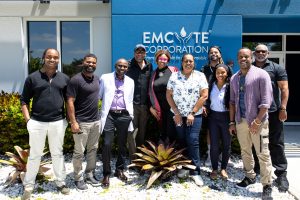
Fort Myers, FL: Edison Awards 2026, Lewis Latimer Fellowship Program visit to EmCyte Corporation with Patrick Pennie

That commitment to the broader regenerative medicine community was on display at the 2026 Edison Awards, where EmCyte hosted attendees of the Lewis Latimer Fellowship Program at their Southwest Florida facility, an experience that gave the next generation of diverse innovators a firsthand look at how medical device innovation moves from concept to clinical reality.


The Future of Healing, Standardized

Regenerative medicine’s promise has always been its logic: use the body’s own biology, concentrated and precisely delivered, to accelerate healing that would otherwise happen too slowly or incompletely. The gap between that promise and clinical reality has historically been the variability of the tools used to prepare and deliver the biologics.

EmCyte’s Pure SupraPhysiologic™ System with AspiraDome™ Technology closes that gap. It does so not by introducing a new biology, but by building the engineering precision around an existing one — making high-yield, low-contamination, reproducible biologic preparation accessible at the point of care for a broad range of clinicians, in a broad range of settings, for a broad range of patients whose bodies already have the capacity to heal.

Learn more about the Pure SupraPhysiologic™ System and AspiraDome™ Technology at emcyte.com, and explore the full 2026 Edison Awards winners at edisonawards.com.

Nomination Guidelines 101: How to Select the Right Category for Your New Product or Service

Every year, genuinely strong products lose ground in award competitions for a reason that has nothing to do with the quality of the innovation itself: they were entered into the wrong category. A judge evaluating enterprise software isn’t the right judge for a materials science breakthrough, and a nomination narrative written for one lens rarely translates cleanly to another. Category selection isn’t paperwork, it’s strategy.

This guide walks through how to choose the right category (and industry classification) for your 2027 Edison Awards nomination, with eligibility running for products and services launched and available to end users between January 2025 and January 2027.

What Causes Strong Products to Get Overlooked by Award Programs?

The most common cause isn’t a weak product, it’s a mismatched category. When a nomination is filed under a category whose judges are evaluating for a different kind of value entirely, the strongest parts of the pitch can go unrecognized simply because they’re not what that panel is calibrated to weigh. A few specific patterns show up repeatedly:

  • Choosing the “closest” category instead of the “correct” one. A connected medical wearable filed under Consumer Solutions instead of Health, Medical & Biotech may read as a lifestyle gadget instead of a health innovation, even if health outcomes are the actual point.
  • Leading with the technology instead of the problem it solves. Judges across every category weigh Concept, Value, and Impact – but what counts as “value” or “impact” shifts depending on the category’s focus.
  • Entering a flagship product in a category built for volume plays, or vice versa, a niche industrial component competing in a broad commercial technology category can get lost next to platform-scale entries.

Getting the category right is the single highest-leverage decision in the nomination process, because it determines who reads your story and what they’re comparing it against.

A Quick Framework for Choosing Your Category

Ask these three questions, in order:

  1. What problem does this solve, fundamentally?
    Not “what industry are we in” but what does the product actually do for the person or system using it?
  2. Who would most credibly judge that claim?
    A cybersecurity platform’s real test is a security expert’s judgment, not a general software reviewer’s.
  3. Where do comparable innovations live?
    If you can name three products you’d consider genuine competitors, whichever category they’d enter is very likely yours too.

If the answers point in different directions, prioritize question 1. The category should follow the core value proposition, not the industry label your company happens to use internally.

Matching Your Industry to an Edison Awards Category

Because the 14 Edison Awards categories are built around real-world innovation types rather than rigid industry codes, most standard industry classifications map to more than one category depending on what the specific innovation does. Here’s a general guide:

Industry Likely Category Fit
Agriculture, Forestry & Fishing Water, Food & Agriculture
Mining & Quarrying Materials Science; Energy & Climate Resiliency
Manufacturing: general/industrial Manufacturing & Logistics; Materials Science
Manufacturing: pharmaceuticals, medical Health, Medical & Biotech
Manufacturing: computers, electronics, optical Commercial Technology; Engineering & Robotics
Manufacturing: motor vehicles, transport equipment Transportation, Aerospace & Flight
Electricity, Gas, Steam & Air Conditioning Supply Energy & Climate Resiliency; Critical Human Infrastructure
Water, Sewerage & Waste Management Water, Food & Agriculture; Critical Human Infrastructure
Construction Critical Human Infrastructure; Engineering & Robotics
Wholesale & Retail Trade Consumer Solutions; Software Solutions
Transportation & Storage Transportation, Aerospace & Flight; Manufacturing & Logistics
Accommodation & Food Service Consumer Solutions; Lifestyle, Entertainment & Design
Information & Communication Software Solutions; Commercial Technology; Cultural Impact & Education
Financial & Insurance Activities Software Solutions
Real Estate Critical Human Infrastructure; Consumer Solutions
Professional, Scientific & Technical Activities Commercial Technology; Materials Science; Engineering & Robotics
Administrative & Support Service Activities Commercial Technology; Software Solutions
Public Administration & Defence Public Safety, Security & Digital Integrity
Education Cultural Impact & Education
Human Health & Social Work Health, Medical & Biotech
Arts, Entertainment & Recreation Lifestyle, Entertainment & Design; Cultural Impact & Education
Other Service Activities Consumer Solutions

Treat this as a starting point, not a rule as the right column is “likely,” not “only.” A construction-tech platform, for instance, could credibly enter Critical Human Infrastructure, Engineering & Robotics, or even Software Solutions depending on whether its core innovation is physical, mechanical, or digital.

When Your Product Spans More Than One Category

This is the norm, not the exception. A few tie-breakers that consistently work:

  • Follow the primary buyer’s decision-making lens.
    If a hospital procurement officer would evaluate your product primarily as a health outcome, enter Health, Medical & Biotech, even if it runs on proprietary software.
  • Follow the metric your product is proudest of.
    If your headline result is an emissions reduction, Energy & Climate Resiliency likely outperforms a more generic technology category, even if the mechanism is software-driven.
  • When truly torn, enter the category with the more specific fit.
    A specific, well-matched category is judged more favorably than a broad one where your entry is one of many similar submissions.

Aligning Your Category Choice With the Judging Criteria

Regardless of category, every Edison Awards nomination is judged on the same three pillars:

  • Concept — the opportunity, development, and execution behind the innovation.
  • Value — differentiation, market advantage, and benefits over alternatives.
  • Impact — social, environmental, and long-term influence.

Once your category is chosen, revisit these three questions specifically through that category’s lens. A Materials Science entry’s “Impact” answer will emphasize different things than a Cultural Impact & Education entry’s — same three questions, very different expected answers.

Frequently Asked Questions

What major innovation award programs focus on commercial product launches? Programs like the Edison Awards, R&D 100, and CES Innovation Awards each evaluate new commercial products, though their scope differs as some focus on consumer electronics specifically, others (like the Edison Awards) cover a much broader span of industries through category-based judging spanning technology, health, materials, infrastructure, and more.

What are the top global awards for commercial product innovation? There’s no single official ranking, but the most-cited programs among B2B and B2C companies alike include the Edison Awards, R&D 100 Awards, CES Innovation Awards, and Fast Company’s Innovation by Design. Companies typically choose based on category fit, judging rigor, and audience — corporate buyer-facing innovations tend to gravitate toward programs with structured, criteria-based judging like Concept, Value, and Impact rather than public-vote formats.

Which product innovation awards are most respected by corporate buyers? Corporate buyers tend to weigh credibility signals: the size and expertise of the judging panel, whether criteria are published and consistent, and how long the program has operated. Programs with panels in the thousands (the Edison Awards’ judging body includes a large group of senior executives, academics, and past winners) carry more weight with procurement and enterprise audiences than smaller, less transparent competitions.

What is the best business award for new product manufacturers? Manufacturers should look for programs with categories built for physical products and industrial innovation specifically, not just software or consumer lifestyle categories. The Edison Awards’ Manufacturing & Logistics and Materials Science categories, for example, are built specifically around production methods, supply chain innovation, and advanced materials, giving manufacturers a category where their innovation is compared against genuinely similar entries.

Which business innovation awards accept nominations for best new product? Award programs branded specifically around new product recognition, like the Edison Best New Product Awards, are built for exactly this use case, as opposed to programs focused on branding, marketing campaigns, or company-wide achievement. Eligibility windows vary by program, so confirm your product’s launch date falls within the required window before nominating.

How do business product awards help validate new product launches? Independent, criteria-based recognition gives corporate buyers, investors, and partners a credibility signal that self-reported marketing claims can’t replicate. It’s particularly useful during a new product launch, when a company hasn’t yet built a track record with a given buyer. Third-party validation shortens that trust gap.


Nominations for the 2027 Edison Awards open September 1, 2026, and run through the end of the year. Products and services must have launched and been available to end users between January 2025 and January 2027. Start your nomination →

Ready for Nomination Season?

Complete the form below to download the 2027 Nomination Guide.

A Founders Guide to Modern Innovation
The Future of the Grid – Panel Discussion 2024 Edison Awards
Edison Award-Winning Brain Technology Featured in U.S. News & World Report