Edison Labs Recap: Fitting Bigger Intelligence into Smaller Footprints

AI is about to change every connected device, and memory and storage will decide whether those devices keep up. That was the message from Bob Snyder of BIWIN, a 2026 Edison Award winner, in our latest Edison Labs webinar. His talk followed one chain: AI needs data centers, data centers need data, and bigger data demands smaller, smarter devices.

It starts with data centers

AI “is held back by the lack of sufficient data centers,” Bob said. The U.S. has almost 3,500, with 378 under construction and 1,000+ planned, and they are getting bigger: Meta’s largest is 105 acres, while its AI-era successor is planned at 960, nine times larger.

Data is outrunning our numbers

In 1991, data scientists coined the zettabyte and yottabyte because humanity had outrun its number systems. One zettabyte holds 250 billion HD movies, and the yottabyte era is expected to last half as long.

The driver is AI’s shadow: robots and industrial systems. Robot production could climb from 100,000 units a year to millions. Bob estimated that roughly 70% or more of the world’s data will soon come from machines, not people.

Bigger data needs smaller tech

AI can’t live solely in the cloud, but the edge is brutal: tiny batteries, zero airflow and millimeters of space. Edge devices need zero latency and bandwidth optimization, filtering locally and sending the data center only what it needs.

Three bottlenecks and the missing piece

The best AI algorithm in the world stays on the drawing board if the storage can’t fit or feed it fast enough. Bob named three bottlenecks: constant reads and writes, the power trap (every processor wake-up drains the battery) and the thermal wall (more processing means more heat). Memory and storage are what BIWIN calls the missing piece.

The proof: two products that shrink the problem

With modern chips, “you no longer have to sacrifice performance for form factor.” BIWIN’s ePOP5X stacks DRAM and storage into one thumbnail-sized package that saves 75% of the space for device makers. The Mini SSD, the 2026 Edison Award winner, delivers full-size SSD performance in a coin-sized, swappable drive and was named one of TIME’s Best Inventions of 2025.

Every device gets rethought

Bob closed with devices from IFA Berlin, from a cocktail robot to a food-scanning necklace to a camera that verifies its footage isn’t AI. Every digital device must now move to AI, as everything analog once moved to digital. His advice: audit your whole portfolio, plan for more memory and storage, and don’t become an industry dinosaur.

Asked what the Edison Award meant for his team, Bob said BIWIN mostly lives inside other companies’ products and is bound by NDAs, so it can’t name the famous gadgets it powers. The recognition of the Edison Award lets BIWIN be seen for its innovation, and he hopes it puts the company on the radar of medical, industrial and other device makers who will need manufacturing partners ready for AI.

Want more conversations like this? Find upcoming Edison Labs webinars at edisonawards.com/events or click HERE to view the video of this insightful webinar with Bob Snyder of BIWIN Storage.

Nominations for the 2027 Edison Awards are open through December 15. Download our Nomination Guide here. 

Blog Post: Thank You, Southwest Florida: Reflecting on Seven Remarkable Years

As the Edison Awards celebrates its 40th anniversary this year, we’ve been doing a lot of looking back, and nowhere does that reflection feel more meaningful than in Southwest Florida.

For the past seven years, Fort Myers has been our home. Not just a venue for an annual Gala, but a genuine partner in bringing our mission to life: honoring the innovators shaping our world, and inspiring the next generation to join them. This year, we’re taking a gap year from hosting our gala event in the region. This is a deliberate pause, and we wanted to take this moment to say thank you.

Why Fort Myers, Of All Places

When we first started thinking about where to plant real roots for the Edison Awards, the answer was almost poetic. Thomas Edison came to Fort Myers in 1885, drawn by its climate and natural beauty, and built a winter estate and laboratory that became a home base for experimentation, and later a gathering place for fellow inventors, including his close friend Henry Ford. Decades before “innovation hub” was a phrase anyone used, Fort Myers already was one.

Seven years ago, we set out to reconnect that history to the present. Through the vision of former Mayor Randy Henderson, John Talmage and Tatum Walker, and the generosity and support from the Horizon Foundation, FGCU, Lee County and the City of Fort Myers, and so many other partners who believe in this community, we didn’t just tell that story, we built a stage for it. Southwest Florida became, once again, a place where the world’s innovators gathered. That’s a credit to the region as much as it is to us, and it’s something we’ll always be proud to have built together.

Bringing the World’s Innovators Home

Each year, we welcomed some of the most influential minds on the planet to Fort Myers. People whose ideas have reshaped entire industries and touched lives around the globe. Over seven years, that list included Jensen Huang, CEO of Nvidia; Jony Ive, former Chief Design Officer at Apple; Gwynne Shotwell, COO of SpaceX; Adam Silver, Commissioner of the NBA; Pat Gelsinger, CEO Intel; Carmichael Roberts, Breakthrough Energy Ventures; Bracken Darrell, CEO, VF Corp; and Reinhold Schmeiding, founder and CEO of Arthrex. The presence of thousands of innovators from more than 15 countries globally turned Southwest Florida into a meeting point for global innovation leadership, drawing international media attention and putting the region on the map alongside the world’s most recognized innovation hubs.

But the story was never just about who showed up for one night. It was about what stayed behind.

The Impact, By the Numbers

Beyond the headlines and the high-profile guests, our seven years in Southwest Florida delivered real, measurable impact. According to Lee County Visitor & Convention Bureau, six years of Edison Awards events generated $30 million in new economic impact for Fort Myers and Lee County, supporting local hospitality, tourism, and small businesses while drawing visitors, media, and business interest to the region. Just as meaningfully, the program helped build something harder to measure but just as valuable: a stronger sense of regional pride, connecting students, entrepreneurs, and civic leaders around a shared identity rooted in Edison’s legacy of collaboration and  invention.

Investing in What Comes Next

From the beginning, our work in Southwest Florida was as much about the region’s future as its present. Through hands-on programming with high school and college students across the community, we worked to connect young people directly to innovators, mentors, and career pathways, the kind of connections that can shape a lifetime of achievement. We’re incredibly proud of the students who walked away from these experiences with a new sense of what’s possible for them.

That commitment extended to a close partnership with the Collaboratory, Southwest Florida’s hub for civic innovation and social impact, helping strengthen the pipeline that connects bold local ideas to the resources needed to bring them to life. It’s a partnership we’re proud of and we are thrilled to continue supporting the Collaboratory’s Lightbulb Series events, keeping that connection to the local innovation community alive and active.

We also left something behind that we hope will outlast any single event: the Lewis Latimer Fellowship Program and the inception of the Innovation Walk, a permanent public tribute celebrating the region’s innovators.  

Why We’re Pausing, And Why We’re Not Worried About It

As the Edison Awards marks 40 years of honoring the people and ideas moving our world forward, it felt like the right moment to pause, reflect, and reimagine what the next chapter of this program looks like. That’s why we’re taking a gap year from our gala event in 2027 to make sure the next one is even better. 

“We’ll be spending this time researching how best to present the Edison Awards from 2028 through 2035, and identifying strategies to grow the program’s economic impact by 40 percent,” said Rob Manes, Director of Business Development. “We’ll be working closely with our Steering Committee throughout this process to secure investors and shape what comes next, and look forward to continuing to bring together the people who are building the future, the way we have these past seven years.”

With Gratitude

To Babcock Ranch, Black & Veatch, Blue Waters Development Group, The City of Fort Myers, HBKS, The Horizon Foundation, FGCU, FPL, Lee County Economic Development, The Luminary Hotel, US Sugar, and every partner, sponsor, volunteer, student, and neighbor who welcomed us: thank you. You helped us tell a story about American innovation that grew from one inventor’s winter laboratory into something the world took notice of.

Happy 40th to us. And thank you, Southwest Florida, for seven years we won’t forget.

Healing From Within: How EmCyte’s Pure SupraPhysiologic™ System Is Advancing the Future of Regenerative Medicine

2026 Edison Awards | Health, Medical & Biotech — Precision Health Technologies

The human body has always had the ability to heal itself. Bones knit, tendons repair, and cartilage regenerates. This sometimes happens slowly, or imperfectly, but it happens with a biological intelligence that medicine has spent decades trying to harness rather than replace. Regenerative medicine is the field built on that premise: that the most powerful healing agents are often the ones already present in your own blood, concentrated, targeted, and delivered where they are needed most. And few therapies embody that premise more directly than platelet-rich plasma (PRP) a biologic concentrate derived from a patient’s own blood and used across orthopedics, sports medicine, aesthetics, dentistry, and wound care to accelerate tissue repair and recovery.

The scale of need driving this field is significant. Musculoskeletal disorders now affect approximately 1.69 billion people globally, according to 2021 Global Burden of Disease data, representing the leading cause of non-fatal disability worldwide and generating 161.9 million disability-adjusted life years. Osteoarthritis alone affects over 500 million people, with prevalence rising sharply as populations age. Against that backdrop, the global PRP market is projected to grow from $647 million in 2025 to $1.76 billion by 2034, driven by rising demand for non-surgical, minimally invasive regenerative treatments — with autologous PRP, derived from the patient’s own blood, holding the largest share of that market at approximately 86%.

The challenge has never been the biology. The challenge has been the engineering: how to reliably capture, concentrate, and deliver the biologics that make PRP therapy effective, with precision and consistency in a clinical setting. EmCyte Corporation, a Fort Myers, Florida-based medical device company with two decades of experience in regenerative medicine, has spent years solving exactly that problem. Their Pure SupraPhysiologic™ Concentrating System with AspiraDome™ Technology was recognized with a 2026 Edison Award in the Precision Health Technologies subcategory, and it represents a meaningful leap forward in what point-of-care biologic preparation can achieve.

The Engineering Challenge Inside Every PRP Procedure

To understand what EmCyte has built, it helps to understand what PRP processing actually requires. A clinician draws a patient’s blood, spins it in a centrifuge to separate its components by density, and then aspirates the fraction known as the buffy coat. This is a thin, visually subtle layer sitting between the red blood cells below and the platelet-poor plasma above. That buffy coat contains the platelets, monocytes, and progenitor cells that give PRP its regenerative properties. Capturing it accurately, without contaminating the concentrate with red blood cells from below or diluting it with platelet-poor plasma from above, is the central precision challenge of every PRP preparation.

In practice, that capture has historically depended on the clinician’s experience and judgment, the quality of their visualization, and the limitations of the aspiration interface between the syringe and the separated layers. Small errors in aspiration angle, depth, or timing translate directly into variability in the biologic output, meaning fewer platelets, more red blood cell contamination, less consistent clinical outcomes.

What AspiraDome™ Changes

EmCyte’s answer to that challenge is a patented dome-shaped aspiration interface called AspiraDome™, which is a design innovation that transforms the aspiration step from a manual judgment call into a guided, reproducible process.

The dome geometry is the key. Rather than a flat or angled interface that can shift or tilt during aspiration, the AspiraDome™ maintains a consistent, centered contact with the buffy coat layer regardless of slight variations in tube angle or clinician handling. As EmCyte describes it, the design offers “better visualization, more accurate buffy coat capture, and less red blood cell contamination,” delivering each of those benefits not through technique, but through the physical design of the device itself.

The Pure SupraPhysiologic™ System pairs AspiraDome™ with a double-spin, single-device platform incorporating variable chamber technology and active disc displacement to standardize cellular separation across the full processing workflow. The result is a system where the variability that traditionally lived in the hands of the clinician has been systematically reduced by engineering. Platelet yields reach over 80% in leukocyte-poor preparations and over 90% in monocyte- and neutrophil-rich formulations. Red blood cell contamination in leukocyte-poor PRP is maintained below 1% HCT s— a level of purity that EmCyte notes “creates a clean, regenerative environment ideal for healing soft tissue and joints” and reduces the potential for post-treatment inflammation and oxidative stress.

Monocyte-rich PRP is a formulation that has attracted significant clinical research interest for its role in promoting M2 macrophage polarization, which shifts tissue environments from inflammation toward repair, angiogenesis, and regeneration, and achieves monocyte capture rates up to 90%. For clinicians treating conditions where modulating the inflammatory response is as important as delivering platelets, that precision matters enormously.

The system also eliminates the flip vent step that complicated earlier generation devices, a workflow simplification that reduces both processing time and the risk of user error, and makes the system more accessible to a broader range of clinical settings and experience levels.

From Variability to Consistency: Why This Matters at Scale

The implications of reducing PRP variability extend well beyond any individual procedure. One of the persistent challenges in PRP research has been the difficulty of comparing outcomes across studies and clinical settings, because PRP preparations vary so widely in platelet concentration, leukocyte content, and activation state depending on the device and technique used. A system that delivers consistent, high-yield, low-contamination biologics every time is not only better for the patient on the table, it is better for the field’s ability to generate reliable clinical evidence.

Autologous PRP therapies have seen a dramatic increase in use for orthopedic conditions over the past five years, expanding into knee arthritis, hip joint arthritis, shoulder arthritis, ankle arthritis, and a growing range of soft tissue applications. As clinical adoption accelerates globally — across Asia-Pacific, Europe, and Latin America, where regenerative medicine infrastructure is growing rapidly — the demand for devices that can deliver consistent, high-quality biologics at the point of care will only intensify.

EmCyte’s Pure SupraPhysiologic™ System is available in 60 mL and 120 mL configurations, with options to integrate the CORE™ Protein Concentrating System for enhanced biologic performance in cases where exosome and growth factor concentration is a clinical priority.

A Company Built on the Science It Sells

EmCyte is not a large-scale medical device conglomerate. It is a specialist, founded on deep expertise in autologous biologics and regenerative medicine, with a product portfolio including PurePRP SP™, PureBMC SP™, CORE™, and the Sapphire Centrifuge. This company is built around a single organizing philosophy: that the quality of the biologic concentrate is the foundation of the clinical outcome.

That philosophy extends into education. Through BioEdge Musculoskeletal Training and the Gulf Coast Biologics programs, EmCyte invests in helping clinicians not just use their technology but understand the science behind it — from buffy coat biology to growth factor delivery to the evidence base for different PRP formulations across different clinical indications.

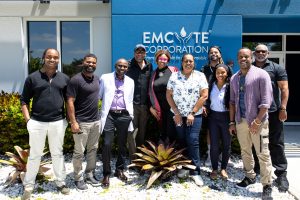
Fort Myers, FL: Edison Awards 2026, Lewis Latimer Fellowship Program visit to EmCyte Corporation with Patrick Pennie

That commitment to the broader regenerative medicine community was on display at the 2026 Edison Awards, where EmCyte hosted attendees of the Lewis Latimer Fellowship Program at their Southwest Florida facility, an experience that gave the next generation of diverse innovators a firsthand look at how medical device innovation moves from concept to clinical reality.


The Future of Healing, Standardized

Regenerative medicine’s promise has always been its logic: use the body’s own biology, concentrated and precisely delivered, to accelerate healing that would otherwise happen too slowly or incompletely. The gap between that promise and clinical reality has historically been the variability of the tools used to prepare and deliver the biologics.

EmCyte’s Pure SupraPhysiologic™ System with AspiraDome™ Technology closes that gap. It does so not by introducing a new biology, but by building the engineering precision around an existing one — making high-yield, low-contamination, reproducible biologic preparation accessible at the point of care for a broad range of clinicians, in a broad range of settings, for a broad range of patients whose bodies already have the capacity to heal.

Learn more about the Pure SupraPhysiologic™ System and AspiraDome™ Technology at emcyte.com, and explore the full 2026 Edison Awards winners at edisonawards.com.

Nomination Guidelines 101: How to Select the Right Category for Your New Product or Service

Every year, genuinely strong products lose ground in award competitions for a reason that has nothing to do with the quality of the innovation itself: they were entered into the wrong category. A judge evaluating enterprise software isn’t the right judge for a materials science breakthrough, and a nomination narrative written for one lens rarely translates cleanly to another. Category selection isn’t paperwork, it’s strategy.

This guide walks through how to choose the right category (and industry classification) for your 2027 Edison Awards nomination, with eligibility running for products and services launched and available to end users between January 2025 and January 2027.

What Causes Strong Products to Get Overlooked by Award Programs?

The most common cause isn’t a weak product, it’s a mismatched category. When a nomination is filed under a category whose judges are evaluating for a different kind of value entirely, the strongest parts of the pitch can go unrecognized simply because they’re not what that panel is calibrated to weigh. A few specific patterns show up repeatedly:

  • Choosing the “closest” category instead of the “correct” one. A connected medical wearable filed under Consumer Solutions instead of Health, Medical & Biotech may read as a lifestyle gadget instead of a health innovation, even if health outcomes are the actual point.
  • Leading with the technology instead of the problem it solves. Judges across every category weigh Concept, Value, and Impact – but what counts as “value” or “impact” shifts depending on the category’s focus.
  • Entering a flagship product in a category built for volume plays, or vice versa, a niche industrial component competing in a broad commercial technology category can get lost next to platform-scale entries.

Getting the category right is the single highest-leverage decision in the nomination process, because it determines who reads your story and what they’re comparing it against.

A Quick Framework for Choosing Your Category

Ask these three questions, in order:

  1. What problem does this solve, fundamentally?
    Not “what industry are we in” but what does the product actually do for the person or system using it?
  2. Who would most credibly judge that claim?
    A cybersecurity platform’s real test is a security expert’s judgment, not a general software reviewer’s.
  3. Where do comparable innovations live?
    If you can name three products you’d consider genuine competitors, whichever category they’d enter is very likely yours too.

If the answers point in different directions, prioritize question 1. The category should follow the core value proposition, not the industry label your company happens to use internally.

Matching Your Industry to an Edison Awards Category

Because the 14 Edison Awards categories are built around real-world innovation types rather than rigid industry codes, most standard industry classifications map to more than one category depending on what the specific innovation does. Here’s a general guide:

Industry Likely Category Fit
Agriculture, Forestry & Fishing Water, Food & Agriculture
Mining & Quarrying Materials Science; Energy & Climate Resiliency
Manufacturing: general/industrial Manufacturing & Logistics; Materials Science
Manufacturing: pharmaceuticals, medical Health, Medical & Biotech
Manufacturing: computers, electronics, optical Commercial Technology; Engineering & Robotics
Manufacturing: motor vehicles, transport equipment Transportation, Aerospace & Flight
Electricity, Gas, Steam & Air Conditioning Supply Energy & Climate Resiliency; Critical Human Infrastructure
Water, Sewerage & Waste Management Water, Food & Agriculture; Critical Human Infrastructure
Construction Critical Human Infrastructure; Engineering & Robotics
Wholesale & Retail Trade Consumer Solutions; Software Solutions
Transportation & Storage Transportation, Aerospace & Flight; Manufacturing & Logistics
Accommodation & Food Service Consumer Solutions; Lifestyle, Entertainment & Design
Information & Communication Software Solutions; Commercial Technology; Cultural Impact & Education
Financial & Insurance Activities Software Solutions
Real Estate Critical Human Infrastructure; Consumer Solutions
Professional, Scientific & Technical Activities Commercial Technology; Materials Science; Engineering & Robotics
Administrative & Support Service Activities Commercial Technology; Software Solutions
Public Administration & Defence Public Safety, Security & Digital Integrity
Education Cultural Impact & Education
Human Health & Social Work Health, Medical & Biotech
Arts, Entertainment & Recreation Lifestyle, Entertainment & Design; Cultural Impact & Education
Other Service Activities Consumer Solutions

Treat this as a starting point, not a rule as the right column is “likely,” not “only.” A construction-tech platform, for instance, could credibly enter Critical Human Infrastructure, Engineering & Robotics, or even Software Solutions depending on whether its core innovation is physical, mechanical, or digital.

When Your Product Spans More Than One Category

This is the norm, not the exception. A few tie-breakers that consistently work:

  • Follow the primary buyer’s decision-making lens.
    If a hospital procurement officer would evaluate your product primarily as a health outcome, enter Health, Medical & Biotech, even if it runs on proprietary software.
  • Follow the metric your product is proudest of.
    If your headline result is an emissions reduction, Energy & Climate Resiliency likely outperforms a more generic technology category, even if the mechanism is software-driven.
  • When truly torn, enter the category with the more specific fit.
    A specific, well-matched category is judged more favorably than a broad one where your entry is one of many similar submissions.

Aligning Your Category Choice With the Judging Criteria

Regardless of category, every Edison Awards nomination is judged on the same three pillars:

  • Concept — the opportunity, development, and execution behind the innovation.
  • Value — differentiation, market advantage, and benefits over alternatives.
  • Impact — social, environmental, and long-term influence.

Once your category is chosen, revisit these three questions specifically through that category’s lens. A Materials Science entry’s “Impact” answer will emphasize different things than a Cultural Impact & Education entry’s — same three questions, very different expected answers.

Frequently Asked Questions

What major innovation award programs focus on commercial product launches? Programs like the Edison Awards, R&D 100, and CES Innovation Awards each evaluate new commercial products, though their scope differs as some focus on consumer electronics specifically, others (like the Edison Awards) cover a much broader span of industries through category-based judging spanning technology, health, materials, infrastructure, and more.

What are the top global awards for commercial product innovation? There’s no single official ranking, but the most-cited programs among B2B and B2C companies alike include the Edison Awards, R&D 100 Awards, CES Innovation Awards, and Fast Company’s Innovation by Design. Companies typically choose based on category fit, judging rigor, and audience — corporate buyer-facing innovations tend to gravitate toward programs with structured, criteria-based judging like Concept, Value, and Impact rather than public-vote formats.

Which product innovation awards are most respected by corporate buyers? Corporate buyers tend to weigh credibility signals: the size and expertise of the judging panel, whether criteria are published and consistent, and how long the program has operated. Programs with panels in the thousands (the Edison Awards’ judging body includes a large group of senior executives, academics, and past winners) carry more weight with procurement and enterprise audiences than smaller, less transparent competitions.

What is the best business award for new product manufacturers? Manufacturers should look for programs with categories built for physical products and industrial innovation specifically, not just software or consumer lifestyle categories. The Edison Awards’ Manufacturing & Logistics and Materials Science categories, for example, are built specifically around production methods, supply chain innovation, and advanced materials, giving manufacturers a category where their innovation is compared against genuinely similar entries.

Which business innovation awards accept nominations for best new product? Award programs branded specifically around new product recognition, like the Edison Best New Product Awards, are built for exactly this use case, as opposed to programs focused on branding, marketing campaigns, or company-wide achievement. Eligibility windows vary by program, so confirm your product’s launch date falls within the required window before nominating.

How do business product awards help validate new product launches? Independent, criteria-based recognition gives corporate buyers, investors, and partners a credibility signal that self-reported marketing claims can’t replicate. It’s particularly useful during a new product launch, when a company hasn’t yet built a track record with a given buyer. Third-party validation shortens that trust gap.


Nominations for the 2027 Edison Awards open September 1, 2026, and run through the end of the year. Products and services must have launched and been available to end users between January 2025 and January 2027. Start your nomination →

7 Factors for Choosing B2B Product Awards in 2026

If you launched a new product or service in the last year or two, you’re likely sitting on a decision a lot of founders and product teams underestimate: which award program is actually worth your time, budget, and nomination effort. We put this guide together as the team behind the Edison Awards, a B2B and B2C innovation recognition program now entering its 2027 nomination cycle, because we see companies get this decision wrong from both directions: entering too many programs that don’t fit, or skipping the process entirely.

There’s no shortage of options. Design-focused programs like the Red Dot Award or iF Design Awards recognize aesthetics and usability. Consumer electronics innovation gets its moment at CES. Editorial lists like Time’s Best Inventions or Fast Company’s Innovation by Design coverage offer press exposure. But for B2B products (the software platforms, industrial systems, medical devices, and infrastructure technologies that don’t always get consumer-facing buzz) the calculus is different. You’re not just chasing a trophy; you’re looking for third-party validation that resonates with corporate buyers, investors, and enterprise decision-makers.

Here are the seven factors worth evaluating before you commit to a nomination.

1. Category and Industry Fit

The first question isn’t “is this a good award?” but instead it should be “does this award actually understand my industry?” A program with narrow or purely aesthetic categories may not have a judging lens built for, say, a critical infrastructure platform or a materials science breakthrough.

Look for programs with category structures broad enough to cover your sector but specific enough that your entry is judged against comparable innovations. The Edison Awards, for instance, organizes its 2027 cycle around 14 categories which range from Commercial Technology and Software Solutions to Health, Medical & Biotech, Engineering & Robotics, and Critical Human Infrastructure . These all map to real-world industry classifications rather than generic “best product” buckets. That structure matters because it determines who’s evaluating your submission and what they’re comparing it to.

2. Judging Criteria and Rigor

Award programs vary widely in how transparent and how rigorous their judging actually is. Some rely on public voting. Others use a small internal panel. Neither tells a corporate buyer much about whether your product was seriously vetted.

Programs worth entering typically publish clear evaluation criteria and back them with a substantial, credentialed judging body. The Edison Awards, for example, evaluates every nomination against three criteria: 

  • Concept: Opportunity | Development | Execution
    How did your innovation come to life? What problem does it solve, and how was it developed?
  • Value: Differentiation | Market Advantage | Benefits
    Why does your innovation matter? How is it better, faster, smarter, or more effective than alternatives?
  • Impact: Social | Environmental | Long-Term Influence
    What difference does your innovation make? How does it improve lives, industries, or the world at large?

Each nomination is reviewed by a panel of trusted senior executives, academics, and past winners who have real world experience in the field they are judging. That kind of structure is what turns a nomination into an actual credential.

3. Who is Part of the Network?

An award’s prestige is really a function of its audience. Ask who is part of their broader network, who sits on the judging panel, who is on the Steering Committee or Board of Trustees, and who follows the results. Programs that draw C-level executives, investors, and industry media create real networking and visibility opportunities beyond the trophy itself,  which matters if part of your goal is attracting partners, capital, or press.

4. The Value of Third-Party Review

One of the most underrated benefits of a strong award program is the expert feedback that comes with it, independent of whether you win. A rigorous third-party review of your Concept, Value, and Impact narrative can surface gaps in your positioning before your sales and marketing teams run into them with actual buyers. This is a big part of why product and innovation teams treat the nomination process itself as worthwhile, not just the outcome.

5. Eligibility Window and Timing

This sounds basic, but it trips up more teams than you’d expect: your product has to fall within the program’s eligibility window. For the 2027 Edison Awards cycle, that means the innovation must have launched and been available to end users between January 2025 and January 2027. Nominations open September 1 and run through the end of the year, with finalists announced in late January and winners recognized in the spring. Missing a window by a few weeks can mean waiting a full cycle to be considered.

6. Marketing and Visibility Rights

Once you’re recognized, what can you actually do with it? The strongest programs give nominees and winners usable assets — seals for your website and marketing materials, press kits, inclusion in media campaigns, and features across newsletters and social channels. If an award doesn’t give you anything tangible to leverage afterward, its long-term marketing value is limited no matter how prestigious the ceremony felt.

7. Cost Versus Realistic ROI

Every credible award program charges a nomination fee, and it’s fair to weigh that cost against the upside. But the ROI conversation shouldn’t stop at the entry fee. Consider the compounding value of expert feedback, media exposure, investor attention, and internal team morale — several past winners have pointed to award recognition as a direct contributor to sales growth and new partnerships in the year following their win. Judge the fee against that fuller picture, not just the sticker price.

Frequently Asked Questions

What is the best way to choose a new product award? Start with fit, not fame. Confirm the program has a category aligned to your industry, publishes clear judging criteria, and draws an audience — executives, investors, media — that matches who you’re trying to reach. From there, weigh the eligibility window, the marketing rights you’ll receive, and the fee against the realistic ROI.

Which business awards recognize breakthrough B2B products each year? Programs like the Edison Awards, and R&D 100 evaluate new product and service innovation, though their category structures, judging processes, and audiences differ. B2B teams should compare how each program’s categories map to their specific industry before nominating.

Why do companies struggle to get recognition for new product innovation? Often it comes down to positioning, not merit, and many nomination forms ask teams to articulate differentiation and impact in ways their internal marketing materials never had to, a gap that a structured judging framework (like Concept, Value, and Impact) can help close. There’s also a perception gap: research published in the Journal of Marketing by University of Maryland’s Robert H. Smith School of Business found that B2B managers tend to assume third-party recognition carries little economic upside, so many never apply. The study’s authors found real, measurable financial gains for B2B firms following third-party recognition, even though switching costs make the effect less immediate than in consumer markets. In short: the awards that seem “not worth the effort” are often exactly the ones with the most unclaimed upside.

How do business product awards help validate a new product launch? Independent, expert-reviewed recognition gives corporate buyers, investors, and partners a credibility signal that self-reported marketing claims can’t. It’s one reason third-party review is often cited as a benefit distinct from winning outright.

The 2027 Edison Awards nomination season opens September 1, 2026, for products and services launched between January 2025 and January 2027. Learn more about entering →

Smaller Than a Coin. Faster Than Almost Everything. Meet the BIWIN Mini SSD.

2026 Edison Awards Bronze Winner | Engineering & Robotics — High-Density Computing Infrastructure

There is a quiet engineering war being fought inside your devices. Every generation of smartphone, laptop, handheld gaming console, and AI-enabled gadget demands more processing power, more storage, and more battery life which is all squeezed into a body that keeps getting thinner and lighter. Most of the breakthroughs that make that possible happen invisibly, deep inside the supply chain, built by companies whose names never appear on the box. BIWIN Storage Technology Co., Ltd. is one of those companies. And with the Mini SSD, they built something that will put their name on the map, in the boardroom and beyond.

Measuring just 15.0 mm × 17.0 mm × 1.4 mm (smaller than a coin, lighter than a key, roughly half the footprint of a microSD card) the BIWIN Mini SSD delivers PCIe Gen4 x2 NVMe performance at speeds up to 3,700 MB/s read and 3,400 MB/s write, with capacities up to 2 TB. The 2026 Edison Awards recognized it in Engineering & Robotics | High-Density Computing Infrastructure, a category that exists precisely for innovations that redefine what is physically possible inside a device. It is a fitting home for a product that solves one of hardware design’s most stubborn constraints: how to pack full SSD performance into the spaces where a full SSD has never fit before. TIME named it to their Best Inventions of 2025 for the same reason. And it is already shipping inside commercially available devices from GPD, OneXPlayer, and others which is proof that this is not just a concept. This is in the market now and shipping worldwide.

The Problem It Solves

For years, device designers faced a hard compromise. Standard M.2 SSDs deliver full NVMe performance but are physically too large for ultrabooks, handheld gaming consoles, AI PCs, tablets, and the emerging class of wearable and edge AI devices. Embedded storage solutions like eMMC fit easily but top out at roughly 500 MB/s, which is just a fraction of what demanding applications need. The gap between “fits” and “fast enough” has been a real constraint on what device makers can build.

The BIWIN Mini SSD fills that gap. It brings PCIe Gen4 performance to form factors that previously had to settle for embedded storage, without sacrificing the physical footprint those devices require. As WCCFTech noted in their December 2025 review, the CL100’s speeds “are substantially higher than those of microSD Express cards, which top out at ~985 MB/s” — making it genuinely transformative for tasks like local AI inference, 4K video editing, and high-speed gaming workloads on compact hardware.

The modular slot design adds another dimension to its appeal. Like a SIM card tray, the Mini SSD pops in and out without tools, enabling storage to be upgraded or swapped across compatible devices, a first for this size class and a significant advantage for manufacturers building for user-serviceable hardware that will hold up in the future.

How BIWIN Built It

What makes the Mini SSD possible is not a single clever feature. It is the result of what BIWIN calls full-stack vertical integration — an engineering posture that separates the company from the vast majority of its competitors. Founded in Shenzhen in 2010 and listed on China’s SSE STAR Market in 2022, BIWIN does not simply assemble components purchased from others. The company writes its own firmware algorithms, develops its own controller technology, and operates its own advanced semiconductor packaging and testing facilities across two major production sites: a memory packaging and testing plant in Huizhou and a wafer-level packaging and testing facility in Dongguan.

The Mini SSD is built on BIWIN’s proprietary Hybrid BGA (FC+WB) packaging technology, which integrates the controller and NAND flash memory into a single plane rather than stacking them in the conventional way. This is what enables the 1.4 mm profile. For device engineers, that profile change cascades into three immediate design advantages.

The first is motherboard real estate. A standard M.2 2280 SSD occupies roughly 1,760 mm² of board space. The Mini SSD occupies 255 mm² which is a reduction of approximately 89%. For product architects designing ultra-thin laptops, AI PCs, handheld consoles, or compact edge devices, that freed space can be reallocated to larger battery cells, additional sensors, better antenna placement, or simply a thinner chassis profile without any performance trade-off.

The second is thermal performance. By integrating the controller and NAND into a single plane using ultra-thin 30–40 μm dies, BIWIN eliminates the layered heat stack that builds up in conventional multi-chip SSD assemblies. Lower operating temperatures translate directly to more sustained performance under load, longer component lifespan, and fewer design constraints around cooling, a feature that is particularly valuable in fanless or passively cooled enclosures where heat management is a primary engineering challenge.

The third is system flexibility. The Mini SSD’s modular slot design (similar to a SIM card tray) means storage is no longer soldered or permanently embedded. Device manufacturers can offer user-upgradeable storage as a product differentiator, build the same chassis in multiple storage configurations without retooling, and simplify after-sales serviceability. For OEMs managing product lines across multiple SKUs and markets, that flexibility has real operational value.

Smart firmware handles dynamic SLC caching, wear leveling, TRIM, and garbage collection to maintain sustained performance under heavy workloads. And the whole assembly is IP68-rated for dust and water resistance, with 3-meter drop protection, built for the mobile, outdoor, and industrial environments where its target devices actually operate.

BIWIN currently serves a lot of top tech companies across the globe, spanning consumer electronics, enterprise hardware, developer platforms, and industrial applications. For device manufacturers evaluating storage partners, that breadth of deployment is a meaningful indicator of production reliability and compatibility at scale.

The Moment BIWIN Is Building Into

The BIWIN Mini SSD is not just a clever piece of engineering. It is a precisely timed solution to one of the most disruptive dynamics in global technology today.

The AI boom has created an unprecedented shortage of NAND flash memory. IDC’s February 2026 market analysis describes the situation as “a potentially permanent, strategic reallocation of the world’s silicon wafer capacity” — with leading foundries diverting their best NAND production toward AI servers and high-bandwidth memory, leaving consumer and edge device markets increasingly supply-constrained. TrendForce projects NAND flash contract prices rising 70–75% quarter-over-quarter in Q2 2026, with no meaningful relief until late 2027 or 2028.

In this environment, supply chain resilience is not a procurement consideration. It is a strategic imperative. BIWIN’s response has been direct and significant: the company recently placed a $1.8B order to secure in June of 2026 silicon wafer supply, a move that positions it as a long-term, committed partner for the device manufacturers who depend on its components. That willingness to make multi-year, billion-dollar supply commitments is the kind of behavior that defines a tier-one manufacturing partner — not a commodity vendor.

The global SSD market, valued at approximately $70 billion in 2026, is projected to reach $191 billion by 2033, growing at 15.4% annually, with Asia Pacific leading at approximately 35% of global market share. BIWIN, headquartered in Shenzhen with facilities across Guangdong province, sits at the geographic and operational center of that growth.

The Shape of What’s Next

The Mini SSD is not an endpoint for BIWIN’s ambitions. It is a proof of concept for what full-stack vertical integration can produce when applied to the most constrained design environments in modern hardware. The same packaging philosophy and firmware intelligence that made the Mini SSD possible is already being applied to storage solutions for AI-powered smart glasses, smartwatches, automotive systems, and edge inference devices — the full spectrum of next-generation connected hardware where the tension between size, speed, and capacity will only intensify.

“We brought SSD speed and performance down to the size of a coin,” said Will Lin, Director of BIWIN Storage Technology USA. “It’s not just small — it’s powerful, fast, and ready for the future of mobile and embedded computing.”

For hardware engineers, product architects, and device manufacturers navigating a global storage market under historic supply pressure, that combination of miniaturized, high-performance, and backed by a vertically integrated manufacturer willing to make billion-dollar supply commitments is exactly the kind of partner profile that moves to the top of a shortlist.

The Edison Awards recognized the BIWIN Mini SSD because it does what the best engineering innovations always do: it makes a hard problem look simple, opens design possibilities that didn’t exist before, it is in devices people use everyday, and it does it at a scale that is already shipping in real products around the world. BIWIN has been building toward this moment for thirty years. The Mini SSD is what it looks like when that preparation meets the right moment, and the right recognition.

Learn more at our upcoming virtual event featuring BIWIN Storage.

Explore the BIWIN Mini SSD at biwintechnology.com, and explore the full 2026 Edison Awards winners at edisonawards.com.


Rethinking the Bean: GALY’s Biocrafting Breakthrough for Cocoa and Cotton

2026 Edison Awards Silver Winner | Water, Food & Agriculture — Consumer Food Innovations

Two of the world’s most beloved natural products are also two of its most fragile supply chains. Cocoa prices surged an extraordinary 136% between July 2022 and February 2024, reaching their highest levels in nearly 50 years, as extreme weather and disease tore through the West African farms that supply the world. Cotton, meanwhile, remains one of agriculture’s thirstiest crops, with research finding that growing it consumes roughly 198 cubic gigameters of water globally each year which is a footprint so significant that the draining of Central Asia’s Aral Sea stands as one of the starkest cautionary tales in modern agriculture. Both crops are essential to daily life across every continent. Both are increasingly vulnerable to a climate that no longer cooperates with traditional farming.

GALY, a Boston-based biomanufacturing company, is proposing something genuinely different: growing these products in tanks, not fields. Its Biocrafted Cocoa & Cotton platform was recognized as a 2026 Edison Awards Silver winner and Top 3 Finalist in the Water, Food & Agriculture category, selected from thousands of global submissions — and it represents one of the most ambitious applications yet of biomanufacturing to mainstream agricultural commodities.

From Seed Cell to Product, No Field Required

GALY’s biocrafting platform works by growing cocoa and cotton directly from seed cells in controlled tanks, skipping the months-long, weather-dependent cycle of planting, growing, and harvesting an entire plant just to use a fraction of it. According to GALY’s own Edison Awards submission, the result is production that is 250 times faster and 500 times more productive than conventional methods, while using 80% fewer resources — a figure that GALY attributes to dramatic reductions across energy, land, water, and emissions. Because the process happens inside a sealed, controlled environment, GALY’s biocrafted cocoa is also produced with zero pesticides, no heavy metals, and what the company describes as complete traceability from seed cell to finished product.

This is not a niche laboratory curiosity. GALY is part of a genuinely global wave of biomanufacturing innovation now targeting agricultural commodities once thought untouchable by this approach. Companies pursuing similar plant cell culture techniques for cocoa and other botanicals span Switzerland, Israel, and beyond, with firms like Zurich-based Food Brewer and Israeli startups Kokomodo and Celleste Bio all racing toward commercial-scale, biocrafted cocoa, while California Cultured has struck supply agreements with chocolate makers including Japan’s largest chocolate company, Meiji. The race is real, the geography is international, and the stakes — a more climate-resilient food system — could not be higher. GALY’s broader vision goes beyond cocoa, leveraging the same platform to reinvent cotton production and demonstrating how biomanufacturing can transform not just food, but some of the world’s most resource-intensive agricultural supply chains. 

Why Cocoa Needs a New Production Model

The fragility of conventional cocoa farming is not a future risk; it is today’s headline. Roughly 60–70% of the world’s cocoa is grown in just two West African countries, Côte d’Ivoire and Ghana, and that concentration has made global chocolate supply acutely vulnerable to localized shocks. In 2024, Ghana’s Cocoa Board reported that 81% of the country’s crop had been affected by cacao swollen shoot virus, while independent climate analysis found that warming has already added roughly 40 additional days per year of extreme heat above cacao’s optimal growing temperature across Côte d’Ivoire and Ghana’s cocoa belt. The resulting price volatility cuts in multiple directions: even as global prices spiked, West African farmers have historically captured only 40–50% of those gains, compared with as much as 90% for cocoa producers in South America — a structural inequity that biocrafted, geography-independent production could help address by decoupling cocoa supply from any single region’s harvest or weather.

Why Cotton Needs One Too

Cotton’s challenges are different in shape but comparable in scale. The crop occupies only about 2.5% of the world’s arable land yet accounts for an estimated 24% of the global insecticide market, according to industry water-footprint research, and supports the livelihoods of more than 250 million people worldwide while employing nearly 7% of all labor in developing countries, per WWF. In water-stressed regions, the stakes are stark: an estimated 97% of the water drawn from Pakistan’s Indus River goes toward growing crops like cotton. GALY’s platform offers a structurally different proposition — cotton produced without irrigation, pesticide runoff, or competition for arable land, and crucially, GALY notes that its biocrafted creations can be produced in any country of interest, enabling onshore textile production wherever a brand or government wants supply chain control rather than import dependency.

A Moment of Recognition, and a Taste of What’s Next

At the Edison Awards gala, GALY’s biocrafted chocolate was featured in a live tasting alongside a separate, cocoa-free confectionery innovation from Cargill and Voyage Foods — two very different paths toward the same goal of a more resilient chocolate supply. The verdict on GALY’s biocrafted chocolate from one live taster: “Divine.” It is a small word carrying real weight, since the central challenge for any alternative production method is whether the result actually performs at the quality bar professional chocolatiers demand.

GALY appears to be clearing that bar at increasing scale. In 2026, the company received Self-GRAS clearance and is moving into commercial-scale manufacturing, with chocolate products developed in close collaboration with leading Swiss partners — a meaningful signal given Switzerland’s standing in global chocolate craftsmanship. The company has also earned backing from a notably international roster of investors and partners, including Inditex, the Spanish parent company of Zara, H&M, alongside Sam Altman, John Doerr, and Breakthrough Energy, and previously took first place in the H&M Foundation’s Global Change Award, often described as a leading prize for sustainability innovation in fashion.

Hope, Grown at Scale

What makes GALY’s recognition genuinely exciting is not just what it has already achieved with cocoa and cotton, but what the underlying platform implies for the future. A biocrafting system capable of producing two of the world’s most resource-intensive, climate-exposed commodities independent of land, weather, and harvest cycles is a system that could, in principle, extend to other crops facing similar pressures. For farming communities in West Africa contending with crop disease and volatile pricing, for cotton-growing regions wrestling with water scarcity, and for brands and governments anywhere seeking more secure, transparent supply chains, GALY’s biocrafted platform offers something increasingly rare in agriculture: a production model that does not have to wait for the climate to cooperate.

Learn more about GALY’s biocrafted platform at galy.co, and explore the full 2026 Edison Awards winners at edisonawards.com.

Power on Demand: How e2Companies’ Virtual Utility Is Rewriting the Rules of Energy Resilience

2026 Edison Awards Silver Winner | Critical Human Infrastructure — Predictive & Real-Time Systems

The world is asking more of its electrical grids than ever before. These grids, many of which were built for a simpler era, are beginning to show the strain. Electricity demand from data centers grew 17% in 2025 alone, outpacing overall global electricity demand growth of 3%, with AI-focused data centers surging 50% in that same period, according to the IEA’s landmark Key Questions on Energy and AI report published in April 2026. By 2030, data center electricity consumption is set to double, with power use from AI-focused facilities poised to triple. Add to that the accelerating electrification of transportation, manufacturing, and buildings, and the picture becomes clear: the world is adding enormous new loads to infrastructure that was never designed for them.

The consequences are already tangible. On April 28, 2025, Spain and Portugal experienced a complete grid collapse, leaving millions suddenly without electricity in an event that triggered deeper analysis of grid resilience across all interconnected European networks. Globally, approximately $5.8 trillion is forecast for grid upgrades between 2026 and 2035, according to JPMorgan’s Grid Resilience analysis, a staggering figure that reflects just how much catching up the world’s energy infrastructure needs to do.

But e2Companies, a Florida-based energy technology firm with headquarters in the United States and Ireland, is not waiting for the grid to fix itself. Its Virtual Utility®, a Silver Medal winner at the 2026 Edison Awards in Critical Human Infrastructure, offers a fundamentally different answer to the reliability problem: put utility-grade power behind the customer’s meter.

The Idea Behind Virtual Utility®

Virtual Utility gives any facility its own private utility. It combines on-site power generation, battery management system, and intelligent controls into one integrated platform that can operate in full sync with the public grid or completely independently of it. Hospitals, data centers, manufacturing plants, and grocery distribution centers can all run on their own terms, regardless of what’s happening on the grid outside.

At the heart of the system is the patented R3Di® System, a self-contained, utility-grade power unit that starts at 1 megawatt, enough to power approximately 100 households. It combines a natural gas generator with a lithium iron phosphate battery management system and is built for both speed and endurance. When a grid disturbance hits, the R3Di responds instantly, with the battery holding the full load for up to 20 minutes while the generator comes online for long-duration coverage.

The brains behind Virtual Utility is Grove365®, a round-the-clock monitoring and control platform that watches the grid, tracks energy market pricing, and manages the system automatically on behalf of each facility. Rather than leaving an energy manager to manually decide when to draw from the grid or rely on on-site power, Grove365 handles those decisions in real time, keeping costs down and the lights on without requiring constant human oversight.

Together, R3Di and Grove365 deliver what e2Companies describes as “the power of a public utility at your own facility.” The public utility model has not changed in over a century.Virtual Utility is built around a different premise: facilities shouldn’t have to rely on a single, centralized path to power.  

From Cost Center to Strategic Asset

For most organizations, energy is simply a bill to be paid. Pricing is set externally, outages are absorbed as an operational fact of life, and there is little an energy manager can do to change either. Virtual Utility breaks that dynamic. By intelligently balancing grid power, onsite generation, and stored energy, facilities can lower their cost per kilowatt-hour, avoid peak pricing charges, and turn energy resilience into a measurable financial return.

As e2Companies puts it on their own platform: “Our power grid is overextended and already on borrowed time, and the age of electrification is adding more risk to the centralized design of utilities. They simply can’t keep up with electric demand.” The company’s response to that reality isn’t a warning. It’s a product. The Virtual Utility® ROI Calculator lets potential customers model their own financial return before committing, which speaks to a confidence in outcomes that most energy resilience solutions cannot match.

Who It’s Built For, and Why the Timing Matters

Two out of five companies experience power loss every month, according to the S&C State of Commercial Power Reliability Report, and even a brief outage can cascade into hours of lost productivity as systems restart. For organizations where continuous power is not a preference but a requirement, that statistic carries real weight.

Virtual Utility is purpose-built for exactly those environments: hospitals where patient care depends on uninterrupted power; data centers where downtime translates directly to financial loss; manufacturers where a momentary voltage drop halts a production line; retailers and food distributors where cold chain integrity is a safety requirement. It requires no interconnection agreement with the public utility and no costly infrastructure upgrades. It installs as a turnkey system and is operational from day one.

The timing of Virtual Utility’s Edison Award recognition matters too. The global energy reliability challenge is no longer a future concern. It’s showing up in capacity auctions, grid operator advisories, and the power purchase agreements of companies scrambling to secure energy supply for new AI infrastructure. e2Companies took part in a live panel discussion at the 2026 Edison Awards on the future of power, a conversation that reflects how central energy resilience has become to the broader innovation agenda across industries.

A New Model for a New Energy Era

The distributed energy future has been anticipated for years. What e2Companies has built with Virtual Utility is proof that it’s already here, working, certified, and deployed, for the organizations willing to take control of their own power rather than waiting for an aging grid to catch up.

The Edison Awards recognition in Predictive & Real-Time Systems reflects exactly that: not an incremental fix to an old system, but a new operating model built for the energy demands of a world that the old system was never designed to serve.

Learn more about Virtual Utility® and the R3Di® System at e2companies.com, watch the 2026 Edison Awards Future of Power panel at youtu.be/F_MeDJzqLP4, and explore the full 2026 Edison Awards winners at edisonawards.com.

Beyond Filtration: How CAVITOX Is Destroying the “Forever Chemicals” We Couldn’t Get Rid Of

2026 Edison Awards Gold Winner | Water, Food & Agriculture — Pollutant & Waste Remediation

For decades, the chemical industry’s most useful invention has quietly become one of its most dangerous legacies. Per- and polyfluoroalkyl substances (PFAS), known colloquially as “forever chemicals,” were engineered to be virtually indestructible, prized for their resistance to heat, water, and oil in everything from non-stick cookware to firefighting foam to water-repellent fabric. That same indestructibility is now one of the defining environmental crises of global water management. Today, 2.2 billion people worldwide still lack access to safely managed drinking water, according to UN-Water, and PFAS contamination is compounding that challenge across every region. Research surveying surface and groundwater across 20 Asian countries found PFAS detectable in roughly 3,000 sampled sites, with industrial activity in textile and automotive manufacturing identified as a major contributing source. Separate biomonitoring studies have found that serum PFOA and PFOS levels in China, Japan, and South Korea rank among the highest recorded globally. In Europe, a January 2026 study found that unchecked PFAS pollution could cost the EU approximately €440 billion by 2050, with the cost of treating already-polluted water alone exceeding €1 trillion. This is a genuinely global problem, with genuinely global stakes.

The technical reason PFAS have resisted cleanup for so long is also the reason most conventional treatment technologies have been unable to fully solve the problem.  The carbon-fluorine bond at the core of every PFAS molecule is among the strongest in organic chemistry, which is precisely why conventional treatment methods like activated carbon filtration and ion exchange cannot destroy it. They can only capture it, transferring the contamination from water into a filter medium that must then be disposed of, often through incineration, which may reintroduce PFAS-related emissions into the environment.  FUST Lab Co., Ltd., a South Korean water technology company, set out to solve the problem at its root. Their answer, CAVITOX, won Gold at the 2026 Edison Awards in the Pollutant & Waste Remediation subcategory of Water, Food & Agriculture — and it represents one of the most genuinely novel approaches to PFAS treatment to reach commercial readiness.

The Difference Between Removing and Destroying

The distinction at the heart of CAVITOX’s innovation is simple to state and enormous in consequence: most water treatment technology removes contaminants. CAVITOX destroys them.

The system works by concentrating high-power ultrasonic energy into a precisely defined focal zone within the water itself. That focused energy generates microbubble cavitation, a phenomenon in which microscopic bubbles form, grow, and then collapse with extraordinary violence on a molecular timescale. According to FUST Lab’s technical specifications, that collapse generates localized conditions exceeding 2,000 bar of pressure and 1,000°C of temperature, instantaneously producing highly reactive hydroxyl radicals with roughly 2,000 times the oxidation power of ozone. It is within that fleeting, extreme microenvironment that the carbon-fluorine bond, the very thing that makes PFAS “forever chemicals,” finally breaks down, decomposing the pollutant through mineralization rather than transferring it somewhere else. 

The results are striking. Independent reporting on the technology cites CAVITOX achieving PFAS degradation rates of up to 99%, a figure also confirmed by the CES Innovation Awards judging panel that separately honored the technology in 2026. Critically, the system accomplishes this without ozone, hydrogen peroxide, or any other chemical additive — a meaningful departure from traditional Advanced Oxidation Processes (AOP), which typically require continuous chemical dosing, generate residual byproducts, and demand significant pre-treatment infrastructure.

Why “Chemical-Free” Changes the Economics, Not Just the Chemistry

In an industry where operational cost is often the deciding factor between a technology that stays in the lab and one that scales into industrial deployment, CAVITOX’s chemical-free design is not a sustainability footnote — it is the foundation of its commercial viability.

Conventional AOP systems require continuous reagent supply chains, careful chemical dosing control, and disposal protocols for the secondary byproducts those chemicals generate. Each of those requirements adds operating cost and operational complexity. By eliminating chemical inputs entirely, CAVITOX is designed for continuous, inline operation that integrates into existing treatment infrastructure with what FUST Lab describes as minimal modification or a modular configuration that scales from small laboratory and pilot installations to full industrial wastewater facilities. The system also sidesteps a less visible but significant environmental cost of conventional treatment: the incineration of PFAS-laden sludge and spent filter media, a disposal pathway that contributes to significant CO₂ and air pollutant emissions. CAVITOX significantly reduces that downstream burden by destroying contaminants before they become waste requiring disposal. 

A Regulatory Clock That Is Already Ticking Everywhere

The timing of CAVITOX’s emergence is not incidental — it is a direct response to a regulatory and public health reckoning that is accelerating across every major economy simultaneously, with the Asia-Pacific region moving as decisively as anywhere else. PFAS compounds are linked to cancer, immune system damage, reproductive harm, and developmental effects. South Korea, where FUST Lab is based, already regulates PFOA, PFOS, and even PFHxS in drinking water, while neighboring Japan has gone further still: under its Chemical Substances Control Law, 138 PFAS compounds were designated Class I Specified Chemical Substances and prohibited from manufacture, import, and use, effective January 2025. Taiwan plans to enforce stricter PFAS limits in drinking water by July 2027, and China, Japan, and South Korea have each adopted restrictions aligned with the Stockholm Convention, an international treaty targeting persistent organic pollutants. The Asia-Pacific PFAS chemicals market itself, valued at $14.26 billion in 2024, is projected to reach $24 billion by 2034 as the region’s manufacturers navigate this tightening landscape — a clear signal that demand for genuine PFAS solutions, not just safer alternatives, is set to grow substantially.

That regulatory pressure is mirrored, not isolated, in Europe and North America. The European Chemicals Agency is finalizing a sweeping universal PFAS restriction proposal expected by the end of 2026, and FUST Lab has stated its intent to enter the European market with CAVITOX ahead of new perfluorinated compound regulations slated to take effect that same year. In the U.S., the EPA designated PFOA and PFOS as hazardous substances under the Superfund law in response to widespread contamination findings. Taken together, the picture across Asia, Europe, and North America is the same: a multi-trillion-dollar global liability, a tightening web of national bans arriving on overlapping timelines, and an industrial sector with genuinely few proven, scalable solutions for true PFAS destruction rather than mere containment.

FUST Lab has already begun translating that opportunity into traction at home. The company won the Grand Prize at South Korea’s 2024 Water Industry Startup Challenge, hosted by the National Water Industry Cluster under the Ministry of Environment, recognizing its microbubble ultrasonic AOP technology as a leading solution for decomposing both PFAS and pharmaceutical wastewater contaminants.

A Platform Built to Scale

What distinguishes CAVITOX from a compelling laboratory result is its design for real-world deployment across radically different scales. The system’s modular architecture allows the same core focused-ultrasonic technology to be configured for a university research lab, a pharmaceutical manufacturing wastewater stream, or a full-scale municipal treatment facility — without re-engineering the underlying process. That scalability matters enormously in an industry where pilot-stage technologies frequently struggle to bridge the gap into industrial deployment.

FUST Lab has also been deliberate about building global reach early. The company maintains demonstration facilities not only in Korea, but in Tsukuba, Japan and Frankfurt, Germany — positioning CAVITOX for adoption across some of the world’s most heavily PFAS-regulated markets. That international footprint, paired with recognition from both the Edison Awards and the CES Innovation Awards in the same year, signals a technology that has moved decisively past proof-of-concept and into commercial readiness.

A Future Where Forever Doesn’t Have to Mean Forever

The name “forever chemicals” was never meant to be optimistic; it was a description of failure, a tacit acknowledgment that humanity had created a class of compounds the natural world, and our existing technology, could not break down. CAVITOX offers something genuinely different: a credible, scalable answer to a problem that has cost economies billions and put the health of hundreds of millions of people at risk.

For the water utility operator navigating Korea, Japan, or Taiwan’s tightening discharge standards, for the European industrial manufacturer facing a 2027 compliance deadline, and for anyone, anywhere, wondering what is actually in their tap water, FUST Lab’s CAVITOX represents something rare in environmental technology: not an incremental improvement on containment, but a fundamental shift toward destruction. The Edison Awards Gold recognition reflects exactly that — not a clever idea, but a market-ready innovation tackling one of the defining environmental health challenges of our time, with the rigor and scalability to make “forever” finally mean something less permanent.

Learn more about CAVITOX and FUST Lab’s full technology platform at fustlab.com, and explore the full 2026 Edison Awards winners at edisonawards.com.
Culture, Upgraded: How the 2026 Edison Awards Are Redefining How We Experience the World

What does it mean to innovate culturally? Not just to build a better gadget, but to change how people watch, learn, explore, and connect… and to make sure more people can do all of those things at all. This year’s Edison Award honorees answer that question from a dozen different directions. Some arrive in your living room. Some are worn on your face. Some run entirely offline in a village without Wi-Fi. What they share is a conviction that technology’s highest purpose is not to impress, but to include.

How We Watch and Play

The relationship between a fan and the thing they love is changing at every level.

Samsung’s Vision AI Companion reframes what a television is actually for. Rather than simply retrieving content on demand, the platform is designed to let viewers actively explore and be inspired by what they watch — turning passive screen time into something closer to a guided conversation between a viewer and their interests. It is a subtle but meaningful shift: the TV is no longer a window, it’s a collaborator.

The NBA took a parallel approach to the live game itself. Its Immersive Technology suite has reimagined the basketball experience through new production partnerships and digital executions designed to make the game feel more personal and communal — whether you’re courtside in an arena or watching from a phone in another time zone entirely.

The most quietly profound entry in this space may be K League’s AI Voice Relay. Built for South Korean football stadiums, it is the first AI-powered live audio commentary system designed specifically for fans who are blind or visually impaired by using real-time camera tracking data to narrate every touch, sprint, and goal in vivid detail. Visually impaired fans could already buy a ticket and take a seat. What they couldn’t do, until now, was fully experience the match. That distinction (between presence and participation)  is exactly the kind of gap that cultural innovation exists to close.

How We See and Move Through the World

The screen has been leaving the living room for years. In 2026, it’s moving closer — to the bridge of your nose, to the wall of a transit station, to the air around you.

The global smart glasses market, valued at $2.46 billion in 2025, is projected to reach $14.38 billion by 2033 at a 24.2% compound annual growth rate, driven by a wave of products finally mature enough for everyday wear. XREAL’s One Series AR Glasses have been leading that charge: the company is barely eight years old and has already sold nearly one million pairs, quietly becoming the global AR market leader while tech giants including Meta, Apple, and Samsung pour billions into the same race.

Taiwan’s Industrial Technology Research Institute brings a different vision of how augmented reality reaches people. NeoVision AR transforms transparent public displays into intelligent spatial companions that are capable of voice-driven, contactless navigation across airports, tourist destinations, and smart city infrastructure. It is AR as public utility rather than personal device, built for the spaces people move through rather than the devices they carry.

The Institute for Information Industry’s AI Edge-XR Fusion Sphere takes that logic into live experience. A generative AI system driven by human motion and voice, it creates multimedia environments in real time at exhibitions and educational events — making the visitor not just an audience but an author of what they see.

How We Learn and Who Gets Access

This is where cultural innovation shows its full range, from hands-on kits for curious kids to survival gear for people without a home.

KiwiCo STEM Science Kits make learning tactile: robotics, game design, electronics, and engineering delivered to curious 9-to-12-year-olds in a format that makes confidence feel like a natural byproduct of play. Breakout Learning’s NextBook platform approaches the same goal from the other direction, using AI to transform passive study into active, moderated peer discussion, giving instructors genuine visibility into how students think, not just what they produce. And 11th Hour Racing’s LivingGallery makes its case through art: an immersive installation of traditional and animated works set to nature-inspired soundscapes, inviting visitors to notice the quietly critical relationship between soil health and water health.

Dot Inc.’s Dot Pad X is the world’s first real-time tactile graphics display, converting images, charts, and text into touchable dots. SolarSPELL from Arizona State University addresses one of the largest unresolved problems in global education: 2.2 billion people worldwide remain offline, according to the ITU’s 2025 Facts and Figures report, the majority in low- and middle-income countries. SolarSPELL is the world’s first solar-powered digital library. Rugged, portable, built from recycled plastic, and designed to broadcast an offline Wi-Fi hotspot loaded with tens of thousands of localized educational resources to any device within range with no internet required.

The Backpack Bed Vertical operates at the most urgent edge of the access question. UN-Habitat estimates that 318 million people are currently homeless worldwide, with nearly 2.8 billion lacking adequate housing. This 6.6-pound device unfolds into a four-season tent with a built-in mattress, insect mesh, and a hypothermia blanket — six products in one, study-proven to keep unsheltered people alive. It is cultural innovation stripped to its most essential form: not a better experience, but the baseline for one.

The Standard This Year Sets

A common thread runs through every one of these innovations. They are not solutions in search of a problem. They start from a real gap — in access, in experience, in who gets to fully participate — and work backward to a product that closes it. A stadium that narrates itself for everyone in the seats. A digital library that works where the internet doesn’t. Glasses that show you a world overlaid with intelligence. A box of robotics that makes a kid feel like an engineer. A bed you can carry.

That breadth, from premium entertainment to bare survival, is what makes Cultural Innovation one of the most exciting new areas to look at this year. Culture is not only what we watch and wear. It is the full texture of how people live, learn, and belong. The 2026 Edison Award honorees in this category are building more of it, for more people, than the year before.

Explore the full 2026 Edison Awards winners at edisonawards.com.

Ready for Nomination Season?

Complete the form below to download the 2027 Nomination Guide.

A Founders Guide to Modern Innovation
The Future of the Grid – Panel Discussion 2024 Edison Awards
Edison Award-Winning Brain Technology Featured in U.S. News & World Report