

Mammography Quality Evaluation (MQE) uses 11 criteria of mammography
quality that enhance radiographers’ skills and mammography process.
Radiographers can adjust operations referring to MQE’s quality warnings
and visual information. MQE helps hospitals to acquire quality
mammograms and minimizes the chance of patient recall for retaking
mammograms.
Award Category: Energy & Sustainability
Synthace
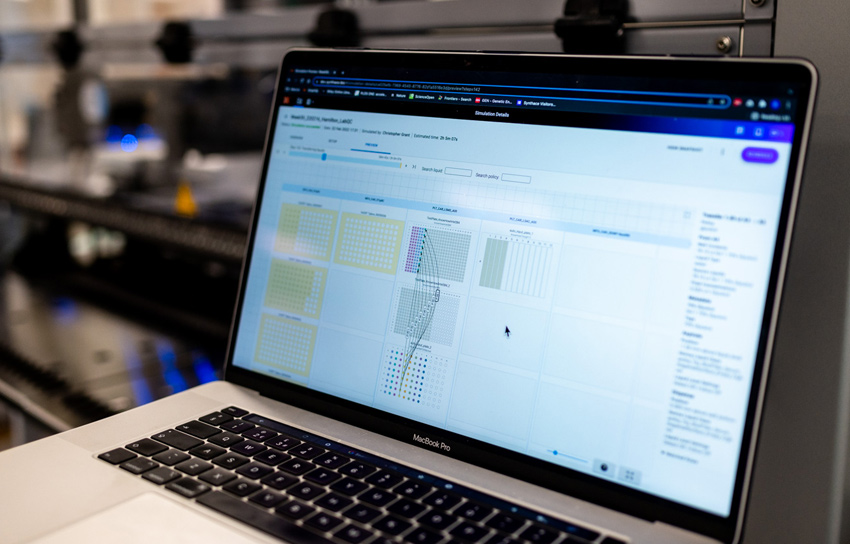
Synthace’s cloud-based digital experiment platform allows scientists to
design and plan experiments, computationally simulate them, schedule
experiments on their automation equipment, and aggregate experimental
data in one place. Allowing reproducibility, and accelerated innovation,
gathering critical data – all without the need to write code.
Recursion OS

The Recursion OS harnesses multiple breakthrough technologies, including
machine learning, to create, organize and study vast amounts of
biological data to build Maps of Biology that can predict trillions of
relationships across biology and chemistry to discover novel insights.
Galleri®

“The Galleri test detects a shared cancer signal across 50+ types of
cancer with a single blood draw.This groundbreaking technology finds
more cancers at earlier stages—even before symptoms appear and when
treatment is more likely to be successful. This could help prevent ~39%
of cancer deaths that would otherwise occur in the next 5 years.”
Intelligent Diagnostics: Pharmacogenomic Testing

Our tests identify genetic factors that contribute to the efficacy,
safety, and tolerability of commonly prescribed medicines. We help
clinicians optimize drug treatment by determining the patient’s expected
outcome, in turn reducing failed drug trials and adverse drug reactions,
thereby decreasing time to achieving optimal therapeutic response.
RetroPerc Nephrostomy Puncture Wire Set
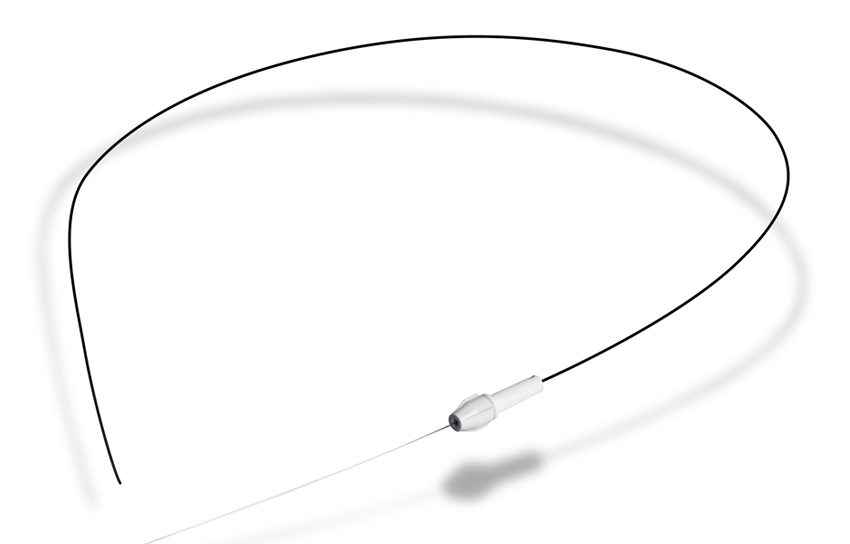
Prior to RetroPerc, 99.9% of renal punctures were created by advancing a
needle from ‘outside to inside’ direction. RetroPerc allows urologists
to advance a needle from the ‘inside to outside’ direction, thus
improving the safety of the kidney puncture for PCNL.
Continuous Tracking Surgical Assistance System (CTSAS)
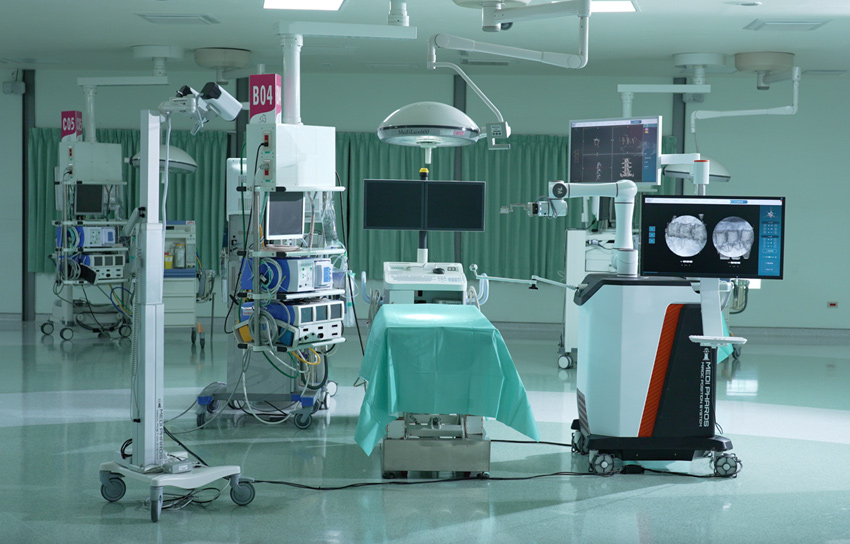
CTSAS is the first surgical navigation system using the dodecahedral
tracker which provides maximum viewing angles with a greatly reduced
size. Combined with real-time visualization and navigation corrections
of patient’s anatomy, the system can track each vertebra with improved
accuracy, especially in the procedure of multilevel spinal surgeries.
Intelligent Radio Frequency Ablation (iRFA)

The system adopts real-time ultrasound imaging navigation, human-machine
interface techniques, and closed-loop algorithms to optimize the RFA
process. It reduces the size of wound on patients, operation duration,
and recovery time. iRFA’s precision tumor targeting and ablation
completion are comparable to clinical requirements.
Coronary Intravascular Lithotripsy (IVL)

Shockwave’s first-of-its-kind Coronary Intravascular Lithotripsy (IVL)
treats patients with severely calcified coronary artery disease (CAD) by
cracking calcium in the heart to restore blood flow. The technology is a
novel application of kidney stone lithotripsy that has been
reverse-engineered to make it safe and effective for use in the heart.
DermaSensor

The world’s first point-and-click skin cancer detection device for
Primary Care Providers. We equip America’s most common provider to
detect the most common cancer. Our CE-marked, FDA Breakthrough product
is a handheld device that employs patented optical spectroscopy and
machine learning technologies to effectively detect all common skin
cancers.
 Discover
 Videos
 Podcasts
 Lewis Latimer Fellowship
 Sponsorships
 The Steering Committee
 Contact Us
 Edison Achievement Award
 Past Edison Award Winners Gallery