The Future Is Wearable: How Smart Consumer Innovation Is Reshaping How We Live, Move, and Stay Safe

2026 Edison Awards | Consumer Solutions — Human-Centric Domestic Solutions, Smart & Adaptive Textiles, and Wearables for Safety & Resilience

The consumer technology of tomorrow is no longer arriving in the form of sleeker screens or faster processors. It is woven into the fabric of your clothing, embedded in the padding of your helmet, and quietly works on your behalf by adapting to your body, your environment, and your risk profile without asking you to do a thing. The most consequential innovations reaching consumers today are not louder. They are smarter, more intimate, and more human-centered than any generation of products that came before them.

The numbers tell a vivid story of where this is heading. The global smart home devices market — already valued at $163 billion in 2025 — is projected to reach $278 billion by 2034. The global wearable technology market, estimated at $92.9 billion in 2025, is on track to reach $230 billion by 2033 at a compound annual growth rate of 12.1%. And the smart textiles sector — perhaps the most transformative frontier of all — is growing even faster, with the market valued at $8.92 billion in 2025 and projected to reach $208 billion by 2035 at a staggering CAGR of 37%. These are not niche technologies finding their footing. They are mainstream markets accelerating through a period of foundational change.

At the 2026 Edison Awards, the Consumer Solutions category captured exactly this moment by honoring innovations across three subcategories that together define the near future of how humans interact with the objects, garments, and protective gear that surround them every day. Among the year’s most recognized organizations was the Hong Kong Applied Science and Technology Research Institute (ASTRI), which took home two Gold and three Silver awards (more than any other Hong Kong organization at the 2026 competition) and the Hong Kong Research Institute of Textiles and Apparel (HKRITA), whose Gold-winning iAdapt platform represents one of the most ambitious garment intelligence projects in the world today. Their innovations, taken together, sketch a portrait of where consumer technology is going — and why it matters.

The Clothing That Breathes With You

Of all the frontiers in consumer innovation, smart textiles may be the one most likely to surprise mainstream consumers with its scope. The idea of a garment that responds to your body — that knows when you are hot, cold, or physically exerting yourself and adjusts accordingly — sounds like science fiction. It is, in fact, already here.

HKRITA’s iAdapt: Intelligent Soft Robotic Clothing, a 2026 Edison Awards Gold Winner in the Smart & Adaptive Textiles subcategory, is the result of a collaboration with The Hong Kong Polytechnic University and represents one of the most technically sophisticated wearable systems to reach market readiness. The soft robotic clothing automatically tunes and optimizes heat and moisture transport properties based on a programmable inflation-deflation process of embedded soft robotic skeletons. The garment maintains consistently high breathability throughout, regardless of external temperature.

This is not a novelty product. iAdapt can be used by citizens under different thermal climates for enhanced comfort and reduced HVAC energy consumption, as well as by professionals including medical personnel, outdoor workers, firefighters, and winter athletes who routinely wear thick functional uniforms across varying temperatures and activity levels — with practical applications spanning everything from emergency response to everyday commuting.

Meanwhile, ASTRI’s Oscillaware Fiber, a Silver Award winner also in Smart & Adaptive Textiles, approaches the challenge from a different angle. Oscillaware Fiber represents a breakthrough in eco-friendly elastic textiles, offering adaptive muscle support that provides over three times the support of traditional fibres during intense physical activity, significantly reducing injury risks. Produced via sustainable melt spinning processes, the fibre combines exceptional comfort, breathability, and design freedom, revolutionising textile performance across sporting and everyday applications. In a market where athletic and performance apparel is among the fastest-growing consumer segments, a fiber that actively supports muscle function — sustainably produced and indistinguishable in feel from conventional textiles — is a significant commercial and functional leap.

Wearables That Protect What Matters Most

The wearables conversation in 2026 has expanded well beyond fitness tracking and notification management. A new generation of safety-oriented wearables is addressing some of the most costly and consequential physical risks in human life, from concussions in sports to hip fractures among the elderly.

Concussion science has fundamentally reshaped how we think about helmet design over the past decade. The growing body of research on chronic traumatic encephalopathy (CTE) and sub-concussive impact accumulation has made clear that conventional helmets — engineered primarily to prevent skull fractures — are inadequate protection against the rotational forces that cause the most damaging brain injuries. ASTRI’s DXP Helmet Pad, a Gold Award winner in Wearables for Safety & Resilience, was purpose-built to close that gap. The dxp® All-Directional Impact Management System tackles the limitations of conventional helmets, which provide inadequate protection against all-directional rotational impacts — a major cause of concussions. The innovative impact management system can be retrofitted to a wide range of helmets without compromising comfort or breathability. Co-developed with Dacy Pro Limited, DXP’s retrofit-first design is particularly significant: it means the technology can reach existing helmet users without requiring them to replace equipment entirely, dramatically accelerating the potential for widespread adoption across cycling, skiing, construction, and contact sports.

The stakes for elderly fall protection are even more acute. Falls are the second leading cause of unintentional injury-related deaths worldwide, according to the WHO, with 37.3 million severe falls requiring medical attention annually and approximately 684,000 deaths. Among adults 65 and older, roughly one in three falls each year. For those over 80, it is one in two. Hip fractures are the most catastrophic outcome — annual fall-related healthcare expenditures in the United States alone exceed $80 billion, with global hip fracture incidence having risen by 168% between 1990 and 2021. And the trend is only worsening as populations age.

ASTRI’s NuHip, a Silver Award winner in the same subcategory, addresses this directly. NuHip is the world’s first shower-friendly hip protector designed for the highest fall-risk scenario. Its innovative one-size-fits-all design adapts to various body shapes whilst providing Level 2 impact protection (EN1621-1 certified), reducing impact forces from 10,000 Newtons to under 2,500 Newtons to prevent fractures. Being both skin-friendly and soft, NuHip promotes daily wear, enabling safer and more independent living for elderly users. The shower-safe design is not a small detail — it eliminates the most common behavioral barrier to consistent hip protector use, which is the inconvenience of removal during bathing. A protection device only works if it is worn. NuHip is designed to be worn all the time.

What the Home of the Future Actually Looks Like

Taken together, this year’s Consumer Solutions winners illuminate a set of principles that will define the best consumer innovations of the coming decade.

The future home and the future wardrobe are not more complicated, they are more intelligent. The devices and garments that will earn lasting adoption are those that solve real, consequential problems (falls, concussions, counterfeiting, thermal discomfort) in ways that require nothing from the user beyond simply using the product as designed. 22% of aging adults over 65 already live in homes equipped with health-monitoring smart technology, and 7.5 million households use smart wearables linked to in-home monitoring systems — numbers that will grow rapidly as the population ages and as products like NuHip, iAdapt, and the DXP Helmet Pad become the baseline expectation rather than the premium exception.

The institutions behind this year’s Consumer Solutions winners deserve particular recognition for demonstrating that breakthrough consumer innovation is genuinely global. ASTRI’s achievement positions them as Hong Kong’s most awarded organization at the 2026 Edison Awards, demonstrating exceptional R&D excellence and enhanced capabilities following the strategic integration of information and communications technology with advanced materials science. ASTRI CEO Ir Dr. Ted Suen noted that the recognition “affirms ASTRI’s world-class innovation capabilities and our successes in translating applied research into commercially viable solutions.” As Thomas Edison understood, the translation from laboratory research into products that a real person can buy, wear, and depend on is the hardest part of innovation. It is also the part that matters most.

The Edison Awards exist to recognize exactly this: not ideas, but solutions. Not prototypes, but market-ready innovations with measurable human impact. In the Consumer Solutions category, the 2026 winners have delivered on all three dimensions: conceptual originality, technical delivery, and real-world impact that scales. The clothing thinks. The helmet pad adapts. The hip protector holds. The future of consumer technology isn’t coming. It’s already being worn.

Explore the full 2026 Edison Awards winners at edisonawards.com. Learn more about ASTRI at astri.org and HKRITA at hkrita.com.


References

  1. Edison Awards — 2026 Consumer Solutions Winners
    Full list of 2026 winners including iAdapt, DXP Helmet Pad, NIR Secure, NuHip, and Oscillaware Fiber
    https://edisonawards.com/winners-2026/
  2. “ASTRI Tops Hong Kong Organisations with Five Awards at the 2026 Edison Awards”
    PR Newswire / Yahoo Finance, April 17, 2026
    Source for all ASTRI product descriptions and CEO quote
    https://sg.finance.yahoo.com/news/astri-tops-hong-kong-organisations-063000338.html
  3. iAdapt: Intelligent Soft Robotic Clothing — HKRITA Project Overview
    Hong Kong Research Institute of Textiles and Apparel
    https://www.hkrita.com/en/our-innovation-tech/projects/soft-robotic-clothing-for-adaptive-thermal
  4. Smart Textiles Market Size, Share & Forecast (2026–2035)
    Global Growth Insights, March 2026
    Market valued at $8.92 billion in 2025; projected to reach $208.39 billion by 2035 at 37.04% CAGR
    https://www.globalgrowthinsights.com/market-reports/smart-textiles-market-123892
  5. Wearable Technology Market Size & Growth
    Grand View Research, 2025
    Market valued at $92.9 billion in 2025; projected to reach $229.97 billion by 2033 at 12.1% CAGR
    https://www.grandviewresearch.com/industry-analysis/wearable-technology-market
  6. Smart Home Devices Market Size, Share & Forecast (2026–2034)
    Fortune Business Insights, 2025
    Market valued at $163.30 billion in 2025; projected to reach $278.32 billion by 2034 at 5.62% CAGR
    https://www.fortunebusinessinsights.com/smart-home-devices-market-112792
  7. “Global, regional, and national burden of hip fractures attributable to falls in older adults: changes from 1990–2021 and 2036 projections”
    Frontiers in Public Health, March 2026
    Falls are second leading cause of unintentional injury deaths globally; 37.3 million severe falls annually; 684,000 deaths; 1 in 3 adults 65+ falls yearly; U.S. fall-related healthcare costs exceed $80 billion/year; hip fracture incidence rose 168.71% from 1990–2021
    https://www.frontiersin.org/journals/public-health/articles/10.3389/fpubh.2025.1674881/full
  8. Smart Home Statistics 2025–2026
    SQ Magazine, 2025
    7.5 million households use smart wearables linked to in-home monitoring; 22% of aging adults (65+) live in homes with health-monitoring smart tech; 13% of homes have fall detection sensors
    https://sqmagazine.co.uk/smart-home-statistics/
  9. 2026 Edison Award Winners: Where Global Culture Meets World-Changing Innovation
    PR Newswire, April 17, 2026
    https://www.prnewswire.com/news-releases/2026-edison-award-winners-where-global-culture-meets-world-changing-innovation-302745467.html

Seeing the Future: How Alcon’s UNITY® VCS System Is Redefining Eye Surgery

Seeing the Future: How Alcon’s UNITY® VCS System Is Redefining Eye Surgery

2026 Edison Award Winner | Health, Medical & Biotech — Surgical Robotics & Precision Therapy

As of 2026, cataracts are responsible for almost 45% of global blindness.1 Behind that statistic is a quieter, more hopeful fact: the majority of cases are preventable or treatable with the right technology in the right hands. For the nearly 28 million people who undergo cataract surgery globally each year — roughly 75,000 every single day — and the millions more who require vitreoretinal procedures to preserve sight threatened by diabetic retinopathy, retinal detachment, or macular disease, the quality of the surgical platform matters enormously.1 Alcon, the global leader in eye care, is advancing vitreoretinal and cataract surgery with the UNITY® Vitreoretinal Cataract System (VCS) and UNITY® Cataract System (CS), the 2026 Edison Award Silver winner in Surgical Robotics & Precision Therapy.

A Convergence That Changes Everything

The premise behind UNITY® VCS is elegantly bold: rather than requiring separate surgical systems for vitreoretinal and cataract procedures, Alcon has unified its best-in-class capabilities for both disciplines into a single, modular platform. The UNITY® VCS handles both anterior segment (cataract) and posterior segment (vitreoretinal) procedures. The UNITY® CS focuses on cataract surgery alone. Together, they represent what Alcon describes as “unprecedented innovation” which is not incremental improvement, but a wholesale rethinking of how ophthalmic surgical systems are designed and deployed.2-6,*

This matters far beyond the operating room. Cataracts remain the leading cause of blindness globally, responsible for an estimated 45% of all blindness cases worldwide and affecting roughly 94 million people.7 The retinal surgery market is growing just as urgently: the global diabetic population surpassed 537 million in 2024, and diabetic retinopathy — a leading cause of blindness among working-age adults — affects an estimated 93 million people worldwide.8,9 Age-related macular degeneration is projected to affect 288 million people by 2040, up from 196 million in 2020.10 The demand for skilled, efficient surgical intervention has never been greater, and the tools surgeons use have never mattered more.

Engineering Breakthroughs at Every Level

What distinguishes UNITY® VCS isn’t any single feature, it’s the magnitude and integration of first-to-market innovations working together across a unified platform.

The World’s Fastest Vitrectomy Probe. At the heart of the UNITY® VCS vitreoretinal system is HyperVit® 30K, which is the world’s fastest vitrectomy probe** that has the capacity to operate at 30,000 cuts per minute (cpm).6,11,** That’s a 50% increase over its predecessor, Alcon’s own CONSTELLATION® HyperVit® 20K.6,11 Speed matters because faster cutting reduces the tractional forces applied to the fragile retina during surgery, mitigating the risk of iatrogenic retinal tears and enabling surgeons to work with greater confidence on complex cases.

4D Phacoemulsification: A Leap Forward for Cataract Surgery. The UNITY® 4D Phaco modality is the first and only volumetric phacoemulsification technology of its kind on the market.3,±,†,†† Bench data shows it delivers up to 2x faster lens removal than Alcon’s previous OZil® Torsional Phaco±, while simultaneously depositing 41% less energy† into the eye.3 This is notable as greater energy introduction during phacoemulsification may be associated with risk of inflammation and cell loss in the inner layer of the cornea.12,13 Accompanying UNITY® 4D Phaco is Thermal Sentry — a first-of-its-kind energy modulation technology that continuously monitors incision site temperature and automatically adjusts ultrasound power to prevent corneal burns.6 It’s the kind of real-time intelligence that transforms a skilled surgeon’s judgment into a system-wide safeguard.

Intelligent Fluidics: Stability You Can Measure. One of the most consequential advances in UNITY® VCS|CS is its Intelligent Fluidics system, which provides proprietary, real-time control of intraocular pressure (IOP), infusion flow, and aspiration flow simultaneously.6 For both cataract and vitreoretinal surgery, the system maintains IOP within physiologic variations of the surgeon’s desired setpoint. This level of precision helps create less disruptive surgical conditions and can reduce the stress placed on delicate retinal tissue and the eye overall.14-16 In cataract surgery, the Intelligent Sentry component demonstrated nearly two times lower occlusion break surge volumes compared to Alcon’s previous CENTURION® system with Active Sentry®, based on bench testing.17 Surge during occlusion breaks is a key risk factor for anterior chamber instability that can lead to complications like a posterior capsule rupture; reducing it meaningfully can improve surgical safety margins.15,18

27+ DS Dynamic Stiffener. Micro-incision vitreoretinal surgery (MIVS) has pushed instrumentation to ever-smaller gauge sizes, but smaller probes traditionally sacrifice stiffness and control. Alcon’s UNITY® 27+ DS technology solves this with a Dynamic Stiffener that delivers the performance of 25+ gauge instruments in the smaller 27-gauge footprint.4,^ The result is optimized surgical control and reach in a less invasive form factor.

TetraSpot Laser. Completing the platform’s vitreoretinal toolkit, UNITY® TetraSpot is the first and only multi-spot, illuminated laser probe — capable of delivering 1, 2, or 4 laser spots simultaneously, reducing laser application time by up to 3.1 times compared to single-spot delivery.2,Δ

Designed for the Way Surgeons Actually Work

Innovation in the operating room is only meaningful if surgeons can actually use it. UNITY® VCS|CS was engineered with clinical workflow in mind from the ground up. System setup and teardown time is 25% faster than the CONSTELLATION® Vision System, reducing OR turnover time by approximately 1.5 minutes per posterior segment surgery — a meaningful efficiency gain in high-volume surgical centers.19,‡,§,§§ The interface features graphical guided setup, integrated RFID instrument identification, and intuitive controls designed to reduce cognitive load during complex procedures. The platform also connects seamlessly with Alcon’s existing and future surgical equipment ecosystem — positioning UNITY® VCS|CS as the connective tissue of a fully integrated surgical suite.6

Alcon’s Commitment to Ending Preventable Blindness

UNITY® VCS doesn’t exist in isolation. It is the latest expression of a decades-long commitment by Alcon to pursue technologies that give surgeons the tools they need to treat and prevent vision loss at scale. The scale of unmet need is sobering: despite approximately 28 million cataract surgeries performed annually, surgical coverage in many countries remains at or below 50%, and in some low-income regions the cataract surgical rate is fewer than 500 procedures per million people per year, compared to over 5,000 in high-income countries.1 The economic burden of vision impairment is estimated by the World Health Organization at $411 billion annually in lost productivity.20 Technology that supports safety and efficiency doesn’t just benefit individual patients — it expands the capacity of healthcare systems to serve more people with the surgeons and facilities they already have.

The 25% reduction in OR setup time,‡,§,§§ the improved platform uptime through Alcon Intelligent Services and remote serviceability, the streamlined inventory management through Custom Pak® — each of these operational efficiencies compounds across thousands of surgical centers worldwide, multiplying the platform’s real-world impact.19,21

Recognized for What It Is: A New Benchmark

The Edison Awards, presented annually since 1987, honor innovations that demonstrate the transformational potential of human ingenuity. Named for Thomas Edison — whose own career was defined by relentless iteration in service of making life better — the awards recognize not just technological achievement, but market-ready solutions that reshape industries and improve lives. Selecting UNITY® VCS in the Surgical Robotics & Precision Therapy category reflects what the platform represents: not an incremental refinement of existing tools, but the establishment of a new benchmark for what ophthalmic surgery can be.

For the surgeons who use it, UNITY® VCS|CS offers capabilities that were simply not available before. For their patients — a 70-year-old grandmother recovering her ability to read, a 50-year-old diabetic patient whose retinal detachment is repaired before permanent damage sets in — the platform represents something more fundamental: support for surgeons treating vision-threatening conditions.

That is the kind of innovation that deserves recognition. And it is the kind of innovation that Alcon has spent decades working to make real.

Learn more about the UNITY® VCS and UNITY® CS at myalcon.com, and explore the full 2026 Edison Awards finalist gallery at edisonawards.com.


© 2026 Alcon Inc. GLB/IMG-UVC-2600018

* Compared to CENTURION and CONSTELLATION Vision Systems. Based on bench data.
** Compared to Constellation HYPERVIT 20k vitrectomy probe.
± Trademarks are the property of their respective owners.
† Based on bench data.
†† Based on N=10 HPs, Artificial cataract lens IOP 55mmhg vacuum of 450 mmHg.
^ Versus Alcon’s Non-Dynamic Stiffener 27+ technology.
Δ MSLP(4) is 3 times faster than SSLP.
‡ For posterior segment surgeries/posterior cassette pack.
§ (P < 0.001).
§§ ~1.5 minutes faster.

References

1. Dreyer, J. (2026, January 9). Cataract stats. Contact Lenses Plus. https://www.contactlensesplus.com/education/cataract-stats.
2. Alcon data on file, 2024. [REF-24615].
3. Alcon data on file, 2024. [REF-24379].
4. Alcon data on file, 2024. [REF-24576].
5. Alcon data on file, 2024. [REF-24498].
6. UNITY® VCS and CS User Manual, 2024.
7. O’Brart D. The future of cataract surgery. Eye (Lond). 2025 Jun;39(8):1451-1456. doi: 10.1038/s41433-025-03745-x
8. Magliano DJ, Boyko EJ; IDF Diabetes Atlas 10th edition scientific committee . IDF DIABETES ATLAS [Internet]. 10th edition. Brussels: International Diabetes Federation; 2021. Chapter 3, Global picture. https://www.ncbi.nlm.nih.gov/books/NBK581940/.
9. Global Growth Insights. (2026, March 9). Retinal surgery devices market size, share, growth, and industry analysis. https://www.globalgrowthinsights.com/market-reports/retinal-surgery-devices-market-110241.
10. Renub Research. (n.d.). Retinal surgery device market: Global forecast by product, application, end user, countries and company analysis 2026–2034. https://www.renub.com/retinal-surgery-device-market-global-forecast-p.php.
11. Alcon data on file, 2024. [REF-24644].
12. Jiang L et al. BMC Ophthalmol. 2020.
13. Malik PK et al. Eye Vis (Lond). 2017.
14. Alcon data on file, 2025. [REF-24899].
15. Vasavada V et al. J Refract Surg. 2014.
16. Vasavada AR et al. J Cataract Refract Surg. 2010.
17. Alcon data on file, 2025. [REF-25562].
18. Zhao Z et al. Int Ophthalmol. 2020.
19. Alcon data on file, 2024. [REF-25374].
20. World Health Organization. (2026, February 10). Blindness and vision impairment. https://www.who.int/news-room/fact-sheets/detail/blindness-and-visual-impairment.
21. Ayres BD et al. Clinicoecon Outcomes Res. 2022.


UNITY® VCS and CS Important Product Information

Caution: Federal (USA) law restricts this device to sale by, or on the order of, a physician.

INDICATIONS / INTENDED USE:

UNITY® VCS:
The UNITY® VCS console, when used with compatible devices, is indicated for use during anterior segment (i.e. phacoemulsification and removal of cataracts) and posterior segment (i.e., vitreoretinal) ophthalmic surgery.

In addition, with the optional laser this system is indicated for photocoagulation (i.e., vitreoretinal and macular pathologies), iridotomy and trabeculoplasty procedures.

UNITY® CS:
The UNITY® CS console, when used with compatible devices, is indicated for use during anterior segment (i.e., phacoemulsification and removal of cataracts) ophthalmic surgery.

Warnings:
Appropriate use of UNITY® VCS and CS parameters and accessories is important for successful procedures. The console supports various accessories to perform various surgical procedures.

Accessories include handpieces and probes, as well as tips and sleeves when necessary. Different accessories are required for different procedures and operating modes.

Test for adequate irrigation and aspiration flow, reflux, and operation of each accessory prior to entering the eye.

The consumables used in conjunction with ALCON® instrument products constitute a complete surgical system. To avoid the risk of a patient hazard, do not mismatch consumable components or use settings not specifically adjusted for particular consumable component combinations.

AEs/Complications:
Inadvertent activation of functions that are intended for priming or tuning accessories while the accessory is in the eye can create a hazardous situation that could result in patient injury.

During any ultrasonic procedure, metal particles may result from inadvertent touching of the ultrasonic tip with a second instrument. Another potential source of metal particles resulting from any ultrasonic handpiece may be the result of ultrasonic energy causing micro abrasion of the ultrasonic tip.

ATTENTION: Refer to the Directions for Use for the accessories/consumables and User Manual for a complete listing of indications, warnings, cautions and notes.

© 2026 Alcon Inc. GLB/IMG-UVC-2600018

Your DNA, Your Doctor: How Dr. Twin AI Is Rewriting the Future of Personalized Medicine

2026 Edison Awards Silver Winner | Health, Medical & Biotech — Next-Gen Biotechnology Platforms

Medicine has always been practiced in the aggregate. Treatments are developed for populations, dosages calculated for average body weights, and diagnoses built on statistical likelihoods. For most of modern healthcare history, this was the best we could do. But it has always come with a fundamental flaw: no two people share the same genome, the same disease trajectory, or the same response to treatment. The future of intelligent healthcare is one where care is anchored not in population averages, but in the specific, irreducible biology of the individual patient.

That future has arrived with Dr. Twin AI, the world’s first searchable DNA digital twin platform, developed by Predictive AI, Inc. A 2026 Edison Award Silver Winner in the Next-Gen Biotechnology Platforms category, Dr. Twin AI decodes each patient’s unique genetic profile to deliver personalized diagnoses and treatment insights at scale. Making evidence-based decisions with 98.6% accuracy, it enables fast, safe, and consistent care — and is already reshaping how patients and clinicians interact with genomic data to make personalized medicine available, on demand.

The Problem: A Healthcare System Running on Averages and Delays

Before understanding what makes Dr. Twin AI extraordinary, it helps to understand the system it is designed to fix. Despite decades of investment in digital health infrastructure, the average American patient still waits 31 days to schedule a new physician appointment — a figure that has surged 19% since 2022 and 48% since 2004, according to the 2025 AMN Healthcare Survey of Physician Appointment Wait Times. Specialist waits are even longer: cardiology averages 33 days, dermatology 36.5 days, and OB/GYN over 41 days. With the Association of American Medical Colleges projecting a physician shortage of up to 86,000 doctors by 2036, those numbers are only expected to worsen.

The bottleneck is not just logistical. Even when a patient reaches a clinician, the diagnostic process is often constrained by what a physician can hold in their head: symptom patterns, test results, general population statistics. What it rarely incorporates — at any speed, let alone instantly — is the patient’s unique genetic architecture: the specific variants that predispose them to certain diseases, determine how they metabolize medications, and define the biological risks quietly encoded in every cell of their body.

The global personalized medicine market, valued at approximately $567 billion in 2024 and projected to reach $1.2 trillion by 2033, reflects the scale of the unmet need and the enormous appetite for solutions that bridge the gap between genomic science and clinical practice. Yet for most patients, that bridge has remained out of reach as it is technically complex, prohibitively expensive, and disconnected from the tools their doctors actually use. Dr. Twin AI is built to close that gap.

The Platform: A Digital Version of You, Ready for Any Question

At its core, Dr. Twin AI does something deceptively simple and technically profound: it takes a patient’s genomic data and transforms it into a living, searchable digital twin. This virtual biological replica can be queried, analyzed, and interrogated by both clinicians and patients in natural language in real time.

The platform deploys 21 organ-specific AI specialists that collaborate simultaneously to analyze a patient’s genetic variants across every major body system. This is not a single generalist model making broad probabilistic guesses. It is a coordinated ensemble of domain-specific intelligence — one specialist for cardiovascular risk, another for oncology, another for neurology — each trained to understand how your specific genetic variants interact with the biological systems they govern.

The technical architecture behind this is equally ambitious. Dr. Twin AI employs Retrieval-Augmented Generation (RAG) models, digital twin technology, and Google Multi-Agentic AI trained on over 347,000 medical records and expert publications, achieving a new level of diagnostic accuracy. Often, conventional clinical decision support systems fail to provide real-time data access, contributing directly to the appointment delays and emergency room bottlenecks that strain the current healthcare system.

The output is not a static report filed away in an electronic health record. It is a dynamic, conversational diagnostic experience — one where patients can ask questions and receive personalized insights drawn from their own genetic blueprint, and where clinicians can access organ-level risk profiles and treatment guidance grounded in that patient’s actual biology.

Predictive AI’s broader platform further extends this ambition. A single whole-genome upload unlocks risk quantification for 22,000+ diseases and drug responses for 210+ medications, enabling what the company calls “5P medicine” — Predictive, Preventive, Personalized, Participatory, and Precision. Their companion BestMed PGx Report applies that same genomic data to pharmacogenomics, predicting which medications will work best for a patient and which may cause adverse reactions — helping ensure, as Predictive AI puts it, “the right drug the first time.”

Why DNA-Based Digital Twins Are a Generational Leap

The concept of a digital twin (a virtual replica of a physical system that can be modeled, tested, and interrogated without touching the original) has transformed manufacturing, aerospace, and urban planning. Its application to individual human biology represents something categorically different from any prior use of the technology.

Research published in npj Digital Medicine describes the vision: a biophysical digital twin that integrates real-time and longitudinal data from an individual’s DNA all the way through to cells, tissues, and organ systems, capable of simulating, predicting, and optimizing health outcomes over a lifetime. The science supporting the value of genomic intelligence in clinical care has accelerated rapidly. Genomically guided therapies have demonstrated response rates up to 85% in certain cancers, significantly improving progression-free survival and reducing side effects compared to conventional treatments, according to a 2025 analysis published by health technology strategists at Talencio. Separate research published in PMC found that molecular profiling extended progression-free survival from 61 to 112 days in targeted oncology applications.

What Dr. Twin AI introduces is the infrastructure to make that level of personalization available not just in elite cancer centers, but wherever a patient and a clinician connect. This may be in a telehealth consultation, an AI-assisted triage system, or an insurance platform assessing risk and coverage. The personalized genomics market alone is projected to grow from $12.57 billion in 2025 to $52.58 billion by 2034, at a compound annual growth rate of nearly 18%. The question has never been whether personalized, DNA-grounded medicine would arrive. The question has been who would build the platform capable of delivering it at scale.

The Reach: From Telehealth to Insurance to Entire Healthcare Systems

One of the most consequential aspects of Dr. Twin AI is not just what it does, but where it can go. The platform is purpose-built for integration across the full spectrum of healthcare delivery, a design choice that dramatically expands its potential reach and impact.

In telehealth, where a clinician may have minutes rather than hours to assess a new patient, access to an AI-generated organ-level risk profile drawn from that patient’s own genome represents a fundamental upgrade to the consultation. Instead of relying on a brief patient history and population-level statistics, the clinician has a real-time window into the patient’s biological architecture to see which genetic variants are present, what conditions they elevate risk for, and how the patient is likely to respond to specific interventions.

In AI triage, the platform can intelligently direct patients to the right specialist before they ever enter an exam room, reducing the misdirected appointments and diagnostic delays that waste time for both patients and providers. In insurance, precise genomic risk stratification opens the door to policy structures that more accurately reflect individual health trajectories, providing downstream benefits for both pricing accuracy and patient incentives toward preventive care.

This multi-ecosystem applicability is not incidental. It reflects Predictive AI’s foundational conviction: that genomic intelligence should not be a boutique service available only to the affluent or the critically ill, but a standard layer of the healthcare experience for every patient.

Recognized for What It Is: A New Foundation for Medicine

The Edison Awards Silver recognition in Next-Gen Biotechnology Platforms places Dr. Twin AI in distinguished company, and reflects what the platform represents at a foundational level. Named for Thomas Edison, whose defining characteristic was not any single invention but a relentless drive to make transformative technology accessible and practical, the awards honor innovations that don’t just advance the scientific frontier but deliver it into the real world in a usable and beneficial way.

Dr. Twin AI does exactly that. The science of personalized genomic medicine has been building for decades, from the completion of the 13-year, multibillion-dollar international Human Genome Project to today, when a clinically certified whole-genome sequence can be completed in hours at a fraction of the original cost. What Predictive AI has built is the platform that converts that science into something a patient can ask a question of, and a clinician can act on — in real time, grounded in that patient’s own DNA.

The implications extend beyond any individual diagnosis. A healthcare system that can integrate genomic intelligence into routine care across telehealth, triage, clinical practice, and insurance is a healthcare system that can be more preventive than reactive, more precise than probabilistic, and more equitable than the one-size-fits-all model it replaces. Dr. Twin AI is not a speculative promise about what genomic medicine might eventually become. It is a working platform, recognized by the 2026 Edison Awards that is delivering on that promise now.

Learn more about Dr. Twin AI at www.predictiveagi.ai, and explore the full list of 2026 Edison Awards winners at edisonawards.com.

© 2026 Predictive AGI Co., Ltd. All rights reserved.

From Beach Town to Innovation Hub: The Evolution of Southwest Florida’s Economy

Southwest Florida has long been known for its natural beauty. White sand beaches, blue skies, and a lifestyle that draws millions each year. But what’s happening beneath the surface tells a far more powerful story. This region is not just growing. It is evolving into a place where business, government, and innovation are intentionally aligned to shape the future of the economy.

The Edison Awards have brought global attention to Southwest Florida in 2026, and the spotlight reveals something remarkable. Of the seven Florida-based companies recognized, five are headquartered right here in our community:

These companies are advancing breakthroughs in regenerative medicine, advanced manufacturing, energy infrastructure, surgical technology, and AI-powered systems. That level of representation is not accidental. It reflects a region that has been intentionally building the conditions for innovation to thrive.

Strong innovation economies are built through coordination and long-term vision. They require alignment between the public and private sectors, access to capital, and a commitment to supporting business growth and diversification. That is where the Horizon Foundation plays a critical role. As a private, investor-supported nonprofit, the Horizon Foundation brings together business leaders, government partners, and community stakeholders to strengthen Lee County’s economic ecosystem. Through collaboration with the Horizon Council and the Lee County Economic Development Office, the Foundation
supports the retention and expansion of existing companies, attracts new and diversified employers, encourages long-term economic sustainability, and connects businesses with the resources they need to grow. This coordinated effort is what turns growth into sustained momentum.

In 2025 alone, the Horizon Foundation invested $550,000 into Lee County’s economic future, supporting workforce opportunities, strengthening business resilience, and helping position the region as a destination for forward-thinking companies. The spirit of innovation here is not new. The awards themselves are named after Thomas Edison, who spent his winters in Fort Myers alongside Henry Ford and Harvey Firestone. Today, that legacy continues through a new generation of companies and leaders who are building what
comes next.

Well-known innovation hubs were not created overnight. They were built through collaboration, investment, and leadership aligned around shared growth. Southwest Florida is doing the same. The 2026 Edison Awards may serve as a global introduction, but the real story is what happens next. This is a region where businesses can scale, ideas can thrive, and opportunity continues to expand. The Horizon Foundation invites business leaders and investors to be part of shaping a stronger, more innovative regional economy.

Bright Ideas Shine at the Edison Awards

The 39th annual Edison Awards are just around the corner, bringing together global innovators, bold ideas, and the next generation of problem-solvers to Fort Myers on April 15–16. Florida Weekly sat down with 2025 Lewis Latimer Fellow Jason Teeters, who knows firsthand how the event sparks connections that last well beyond the ceremony. Read the full feature to hear his insights on AI, human connection, and why surrounding yourself with people who think differently is the key to innovation.

BY JOHNATHAN MINEHAN

Read the full article at Florida Weekly -> 

Building Tomorrow: How Babcock Ranch Is Rewriting the Rules of Resilient Communities

When Hurricane Ian barreled across the Gulf of Mexico in September 2022, it made the kind of turn that forecasters dread. What had been projected as a strike on Tampa instead became a catastrophic Category 4 assault on Fort Myers Beach that then marched directly over Babcock Ranch. Sustained winds of 100 miles per hour with gusts reaching up to 150. A storm moving at a crawl, just three miles per hour, prolonging the punishment for hours.

And yet, when dawn broke over Babcock Ranch, something remarkable had happened: almost nothing.

“I remember when I got up and went through the neighborhood, people were walking around just staring,” said Syd Kitson, founder and CEO of Kitson Partners and the visionary behind Babcock Ranch, speaking at a 2025 “Building for Resiliency” panel at the Edison Awards. “There were just groups of people outside looking around because we had very little damage, and we never lost electricity through the entire night.”

In a state where catastrophe had become almost routine, Babcock Ranch had done the unthinkable. It had weathered one of Florida’s most destructive storms not with luck, but with deliberate, forward-thinking design. That story is increasingly urgent, and it carries lessons for every developer, investor, and community leader navigating an era defined by climate risk.

A Crisis That Demands Innovation

The numbers are stark. In 2024 alone, natural disasters around the world caused $368 billion in losses, and only 40% of that figure was covered by insurance, according to Aon’s 2025 Climate and Catastrophe Insight report. That same year marked the ninth consecutive year that global catastrophe losses exceeded $300 billion. Hurricanes Helene and Milton together accounted for more than $110 billion in economic losses with Helene alone racking up $78.7 billion, the largest single-event loss of the year. Since 1980, tropical cyclones in the United States have caused more than $1.5 trillion in total damages and 7,211 deaths according to NOAA, making them the costliest and deadliest category of weather disaster on record.

Florida sits near the epicenter of this vulnerability. Its coastline, its geography, and its population growth make it one of the most exposed places in the country. And yet people keep coming, and developers keep building in ways that repeat the same costly mistakes.

“Doing the right thing makes you more money,” Kitson said. “It costs more money up front, but the return that we got on our investment up front is tenfold. And so don’t kid yourself, anybody that tells you it’s too expensive to do it the right way, they’re wrong.”

Engineering Against the Storm

Babcock Ranch was conceived as proof that the right way is achievable. Located approximately 20 miles inland from Florida’s west coast and sitting 30 feet above sea level, the development began with a decisive geographic advantage: distance from storm surge, the most lethal force a hurricane carries ashore. When Hurricane Helene struck the Keaton Beach area, a storm surge of 12 to 16 feet destroyed roughly 80% of the buildings in its path. That same surge, dissipated by distance and friction from coastal mangroves and terrain, diminishes dramatically as it travels inland, making Babcock Ranch’s inland position not just a design choice but a life-safety decision.

But elevation and location were only the beginning.

The engineering team behind Babcock Ranch built its water management system around a foundational principle: work with nature, not against it. The surrounding region’s wetlands have historically absorbed storm runoff like a sponge had been largely eliminated by conventional grid-style development that paves over everything in the name of maximizing land use. Babcock took the opposite approach.

The development was built around the existing wetland systems, leaving them intact and allowing them to do what they were designed by nature to do. Beyond that, the team constructed an engineered complement to those natural systems: a network of lakes and ponds designed as interconnected bowls. Homes sit at the highest elevations; roads are built lower, intentionally, so that in extreme events they can channel water away from structures and into collection points. Each lake connects to the others through underground pipes, so that when one fills, it drains to the next — a cascading buffer against overflow.

Before a hurricane arrives, the team drains these bowls proactively, creating additional capacity to absorb the incoming rainfall. Water is then discharged slowly through a central drainage corridor that runs to a nearby river, with wetlands along the way slowing the flow and letting the land absorb what it can. In a modeled 100-year storm event — the kind that used to be considered a planning ceiling but is now happening with alarming regularity — the ranch would experience approximately 14 inches of rainfall and a four-foot rise in water levels. The homes would remain one foot above the waterline. The grocery store and office buildings, two feet above it.

The community has now weathered four hurricanes — Irma, Ian, Helene, and Milton — with no to minimal damage and no flooding within the development.

More Than Engineering: A Community Built for Life

Kitson’s vision for Babcock Ranch extended well beyond stormwater management. The community was designed from the ground up as a living laboratory for what sustainable, resilient development can look like across every dimension of daily life.

Babcock Ranch is powered entirely by solar energy, the first town in America to achieve that distinction. Florida Power and Light partnered with the development to install 150 megawatts of capacity (700,000 panels across 840 acres) that feeds the town directly before any surplus returns to the wider grid. A 10-megawatt solar-to-battery facility provides storage backup. All utilities are buried underground, eliminating the overhead lines that take down power across conventional communities in every storm. The result: during Hurricane Ian, as surrounding communities went dark for days or weeks, Babcock Ranch never lost power.

The community spans 18,000 acres in total, with half preserved as natural land. Of the original 91,000-acre ranch that Kitson Partners acquired in 2006, fully 90% is now in permanent conservation, a legacy Kitson describes as among the things he’s most proud of. A 17,000-acre mitigation area for the Florida panther has already paid dividends: a female panther and her kittens were recently documented there for the first time in 40 years, alongside a tagged 160-pound male. Curry Lake, drained by prior farming operations, has been rehydrated through a weir system and is now teeming with wildlife.

Every home and business receives gigabit fiber connectivity. Streets are designed with roundabouts instead of traffic lights, reducing congestion and eliminating another point of infrastructure failure. One hundred miles of trails connect the community, with extra-wide roads and dedicated bike lanes encouraging residents to move through the town on foot or by wheel. A K-12 school built on project-based learning sits at the literal center of the development, and at 3 o’clock each afternoon, hundreds of children pour out onto bicycles and scatter across the community.

The water management system itself is living and dynamic. Seasonal variation is built into its design: lake levels rise during Florida’s wet season and recede during dry months, and the team continuously monitors water levels year-round. This seasonal rhythm is a feature, not a flaw and this is a sign of a resilient water system working in harmony with the natural environment rather than fighting it.

The Future at Work

What Babcock Ranch represents is not a utopian experiment available only to the affluent. It is a demonstration that the future of development is viable, profitable, and replicable. This means that the argument against building this way falls apart under scrutiny. In fact this is a smart business that has invested in community, resiliency, and building for the future and has proved that it pays off in the long run. Resilient infrastructure, by that logic, is simply a premium product.

The innovation pipeline feeding into communities like Babcock Ranch is expanding rapidly. The climate adaptation and resilience investment space is estimated to represent nearly a trillion dollars in opportunity and spans early warning systems, flood barrier technology, wildfire response equipment, water generation systems, and much more. Some of those solutions are being tested in real time at Babcock Ranch, which has hosted Innovation Way, a dedicated program in which builders implement emerging technologies directly into homes and then measure performance through independent third-party assessment.

“We want to be a living laboratory,” Kitson said. “We want to be leaders, not followers.”

The spirit of building ahead of the disaster instead of reacting to it, of designing for the century rather than the code minimum, of seeing resilience not as a cost but as a return on investment is precisely the spirit that drives innovation. It is the spirit that asks: why wait until the storm comes to start preparing? Why rebuild the same way after a catastrophe when we already know a better way?

The answers are blowing in from the Gulf. Babcock Ranch is listening, and building accordingly.


Babcock Ranch is located approximately 25–30 miles north of Fort Myers, Florida, and is open for visits. For more information, visit babcockranch.com.

The Edison Awards honors innovation and innovators who are driving positive change across industries. Learn more at edisonawards.com.

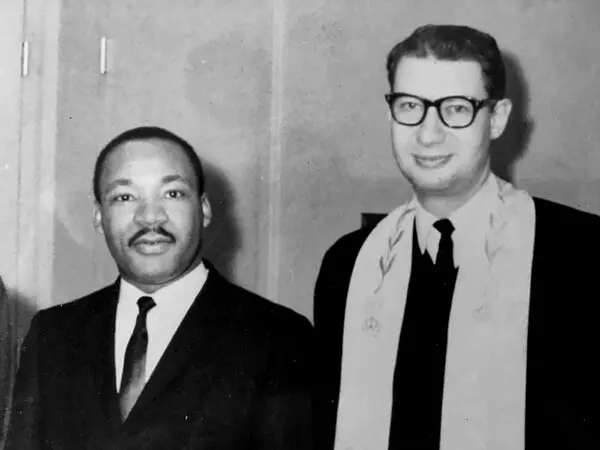
The Power of Partnership: How Rabbi Israel Dresner and Dr. Martin Luther King Jr. Changed America

In honor of Black History Month, the Edison Awards celebrates the untold stories of alliance and collaboration that shaped the civil rights movement, and how they parallel the innovation partnerships we honor today.

When journalist and filmmaker Avi Dresner recently spoke to the Latimer Fellowship Program, he drew a powerful parallel that resonates deeply with the Edison Awards’ mission: just as Lewis Latimer was essential to Thomas Edison’s groundbreaking work, Rabbi Israel “Sy” Dresner was a crucial ally to Dr. Martin Luther King Jr. in the fight for civil rights. Both stories remind us that transformative achievements, whether in technology or social justice, are never the work of individuals alone.

“Nobody does it alone,” Avi told the fellows. These aren’t “savior stories,” but examples of “game recognizing game,” or a mutual recognition of each other’s contributions and a commitment to shared goals that transcend individual acclaim.

A Legacy Born from Tragedy

Rabbi Dresner’s journey toward civil rights activism began in tragedy. Born in 1929 in a Manhattan tenement to East European immigrant parents, one of his earliest memories at age four or five was hearing Hitler speak on the radio while his father wept. Young Sy understood, even then, what would happen to their family in Europe. His father would eventually lose over 30 first cousins in the Holocaust.

Raised with strong Jewish values, Dresner internalized the commandment “justice, justice shall you pursue” and the Torah’s repeated reminder to “remember the stranger, for you were strangers in the land of Egypt,” a phrase that appears 36 times in Jewish scripture. His first arrest came at age 18, during a sit-in protesting Britain’s refusal to allow Holocaust survivors into Palestine. When his mother said it was “a shame for a Jewish boy to get arrested,” he responded with pride, the first sign of the moral courage that would define his life.

The Freedom Rides: Where It All Began

In June 1961, Rabbi Dresner participated in the very first interfaith clergy Freedom Ride from Washington, D.C. to Tallahassee, Florida. The group of 18 (four Reform rabbis and 14 Protestant ministers) faced immediate danger. In Tallahassee, ten members were arrested at an airport restaurant when the manager locked the door, claiming they were “closed.” While in jail, other white prisoners set their mattress on fire.

This arrest became Dresner et al. v. City of Tallahassee, the first Freedom Rider case to reach the Supreme Court, with Rabbi Dresner as lead defendant. Three years later, as the Civil Rights Act had passed, the “Tallahassee 10” returned to complete their sentences, but this time they could eat in the same airport restaurant where they had been arrested. A photograph captured this powerful moment of progress. 

Meeting Dr. King Under Unfortunate Circumstances

Rabbi Dresner and Dr. King first met in August 1962, shaking hands through jail cell bars in Albany, Georgia. This was before King’s major victories, as the Birmingham campaign was eight months away, and the a year to the day before the March on Washington. At Dr. Anderson’s home in Albany, surrounded by the White Citizens Council (described as “the Klan without the hoods”), King spent an hour calming the anxious rabbi with conversation.

During that conversation, King shared his admiration for how Jews celebrated being descendants of slaves, not just kings—building a whole holiday around this identity. Dresner’s response was sobering: Jews had been slaves by the millions less than 17 years prior in Nazi concentration camps. This wasn’t ancient history; it was living memory.

King asked Dresner to recruit clergy for what would become the largest mass arrest of clergy in U.S. history, 75 clergymen arrested in Albany. On January 18, 1963, King delivered what was possibly his first sermon during an actual Shabbat service at Rabbi Dresner’s synagogue in Springfield, New Jersey.

St. Augustine: The Turning Point

In 1964, Dr. King sent a letter from jail in St. Augustine, Florida, calling it “the most lawless community in which we have ever worked,” describing shootings, beatings, and house burnings. He specifically requested that Dresner bring a “task force from the reform movement” to witness for “self-respect and human dignity.”

Rabbi Dresner recruited 16 rabbis, the largest arrest of rabbis in U.S. history. When they entered a mass meeting, King announced “Moses’ children are here” and called Dresner to the pulpit. Dresner spoke so long that the other rabbis shouted “Genug!” (enough!) in Yiddish to get him to stop.

The rabbis’ arrest at the Munson Motor Lodge created a strategic diversion: while they were arrested at the front entrance, activists integrated the pool in the back. The hotel owner’s response—pouring muriatic acid into the pool while swimmers were still in it—made the front page of the New York Times. That single photograph helped break the Senate filibuster and led to passage of the Civil Rights Act.

From jail, the rabbis wrote a letter explaining their motivations: “We came because we knew that second only to silence, the greatest danger to man is loss of faith in man’s capacity to act. We came as Jews who remembered the millions of faceless people who stood quietly watching the smoke rise from Hitler’s crematoria.” This powerful statement will serve as a framing device in the upcoming documentary “The Rabbi & The Reverend,” read by prominent Americans including Senator Cory Booker, Congressman James Clyburn and Congresswoman Debbie Wasserman Schultz.

Selma and Beyond

Following Bloody Sunday on March 7, 1965, Dr. King called for a “ministers’ march” two days later. Of all the clergy present at the foot of the Pettus Bridge, King asked only two people to deliver the prayer: Rev. Ralph Abernathy and Rabbi Dresner. They didn’t know King would turn them around after the prayer—Dresner was prepared to face the same troopers who had beaten activists just 48 hours earlier.

The partnership continued until King’s final year. They saw each other one last time in 1967 when King spoke against the Vietnam War at Riverside Church, exactly one year before his assassination. King inscribed his book “Where Do We Go From Here?” to “my good friend, Si Dresner, for whom I have great respect.”

A Forgotten Alliance

The Black-Jewish partnership that Rabbi Dresner embodied was once central to American progress but has largely been forgotten. At the turn of the 20th century, Julius Rosenwald, president of Sears Roebuck, and Booker T. Washington founded over 5,000 schools that educated two-thirds of African American children in the South, including future civil rights leaders like Maya Angelou. Jewish organizations helped fund the early NAACP. This history of solidarity deserves to be remembered and revived.

Bending the Arc Together

Avi Dresner shared a profound insight during his presentation: “The arc of the moral universe bends toward justice, but the arc of human civilization bends toward innovation, and both require people to actively bend them.” Unlike technology, which progresses linearly, social progress can go backwards without constant vigilance. Rights we now take for granted—integrated dining, transportation, housing—were crimes during the civil rights era and required tremendous sacrifice to achieve.

This message resonates powerfully with the Edison Awards’ mission and the Latimer Fellowship Program. Just as we celebrate innovation and the partnerships that make it possible, we must remember that progress in any field requires allies who recognize each other’s contributions and work together toward shared goals.

The documentary “The Rabbi & The Reverend,” currently in production with Avi Dresner as executive producer, will bring this crucial story to wider audiences. Rabbi Dresner and Avi are also featured in the third episode of Henry Louis Gates Jr.’s PBS series “Black and Jewish America: An Interwoven History,” airing February 17th.

As we honor Black History Month, let us remember that the greatest achievements in innovation and justice alike require us to stand together, recognize each other’s contributions, and actively bend the arc toward a better future, because nobody does it alone.

Learn more about the Latimer Fellowship Program and its mission to support diverse innovators at latimerfellows.com

Edison Awards Unveils 2026 Finalists: Where the World’s Next Breakthrough Begins

Commissioner of the NBA Adam Silver to Receive Prestigious Achievement Award

Fort Myers, Florida – January 20

Today, the Edison Awards reveals its 2026 Finalists: a curated collective of builders, disruptors, and visionaries whose work is already shaping tomorrow. This isn’t just recognition, it’s admission to an elite network where the world’s most consequential innovators connect, collaborate, and catalyze change. 

For 39 years, the Edison Awards has been the proving ground for breakthrough innovation. Our finalists don’t just create products, they ignite movements. They don’t follow trends, they set them. From AI redefining creativity to biotech extending human potential, this year’s finalists represent the cutting edge of what’s possible when imagination meets execution. 

“Edison built the world’s first true innovation lab, a place where brilliant minds could collide, collaborate, and create,” said Frank Bonafilia, CEO of the Edison Awards. “That’s what we’ve built here. Our finalists aren’t just competing for recognition; they’re joining a community where the connections made often become as transformative as the innovations themselves. When you bring together this caliber of talent, anything is possible.”

Where Excellence Meets Elevation

Being named an Edison Awards finalist is just the beginning. This community is built on the understanding that today’s emerging innovator is tomorrow’s industry disruptor. Past finalists and winners have gone on to secure billions in funding, launch category-defining products, and fundamentally reshape their industries. 

This year’s Achievement Award honors Adam Silver, whose visionary leadership exemplifies innovation at the highest level. Silver has revolutionized professional sports through visionary leadership as NBA Commissioner, driving unprecedented growth across the league’s global ecosystem. Since 2014, he has launched the Basketball Africa League, introduced the NBA Emirates Cup to elevate in-season competition, advanced plans for NBA Europe, overseen landmark 11-year media rights deals with Disney, NBCUniversal, and Amazon, created the NBA 2K League as the first official esports league operated by a U.S. professional sports league, and spearheaded the WNBA’s most significant growth era with expansion planned to 18 teams by 2030. His vision has helped position basketball as the world’s fastest-growing major sport and set a modern blueprint for sports business and global engagement.

The Edison Advantage

The Edison Awards ceremony will take place April 15–16, 2026, in Fort Myers, Florida—home to Thomas Edison’s winter estate and a city rapidly emerging as a hub for innovative enterprise. This year’s gathering brings together the names the world already knows and the ones it soon will. It is where emerging founders connect with established CEOs, where breakthrough ideas earn new believers, and where the next decade of innovation begins to take shape.

The Edison Awards finalists are selected from thousands of global submissions and evaluated by an independent panel of senior scientists, engineers, designers, and industry leaders who assess each innovation on their Concept, Value, and Impact. The result is a unique group that represents not just the best of the year, but the innovations that will go on to define the next generation.

Building the Future, Together

The Edison Awards extends deep gratitude to our 2025 sponsors, whose commitment to innovation makes this platform possible: Babcock Ranch, Black & Veatch, Blue Waters Development Group, Cargill, City of Fort Myers, Collaboratory, Cushman & Wakefield, EmCyte, FGCU, 35 Mules, HBKS Wealth Advisors, Horizon Foundation, Lovesac, U.S. News & World Report, and U.S. Sugar. 

About the Edison Awards

Established in 1987, the Edison Best New Product Awards™ honor excellence in innovation, celebrating the products, services, and leaders transforming how we live and work. Inspired by Thomas Edison’s legacy, the program recognizes game-changing solutions across industries worldwide, offering global recognition, credibility, and connections that drive growth. The 2026 Edison Awards will be held April 15–16 in Fort Myers, Florida. Register at www.edisonawards.com.


Media Contact:
Rachel Reed, Marketing Director
rachel@edisonawards.com


Ready for Nomination Season?

Complete the form below to download the 2027 Nomination Guide.

A Founders Guide to Modern Innovation
The Future of the Grid – Panel Discussion 2024 Edison Awards
Edison Award-Winning Brain Technology Featured in U.S. News & World Report